Why Is Process Street the Best for Incident Management?
Many teams still handle incidents through scattered emails and spreadsheets that leave no clear record when auditors arrive. These gaps turn small events into repeat problems and extend recovery time.
By the end of this article you will know exactly how Process Street's workflow automation, AI monitoring, and policy controls combine to create a single audit-ready incident process. You will also see which teams gain the most from each feature set and how the pricing tiers map to real incident volume.
What Is Process Street?
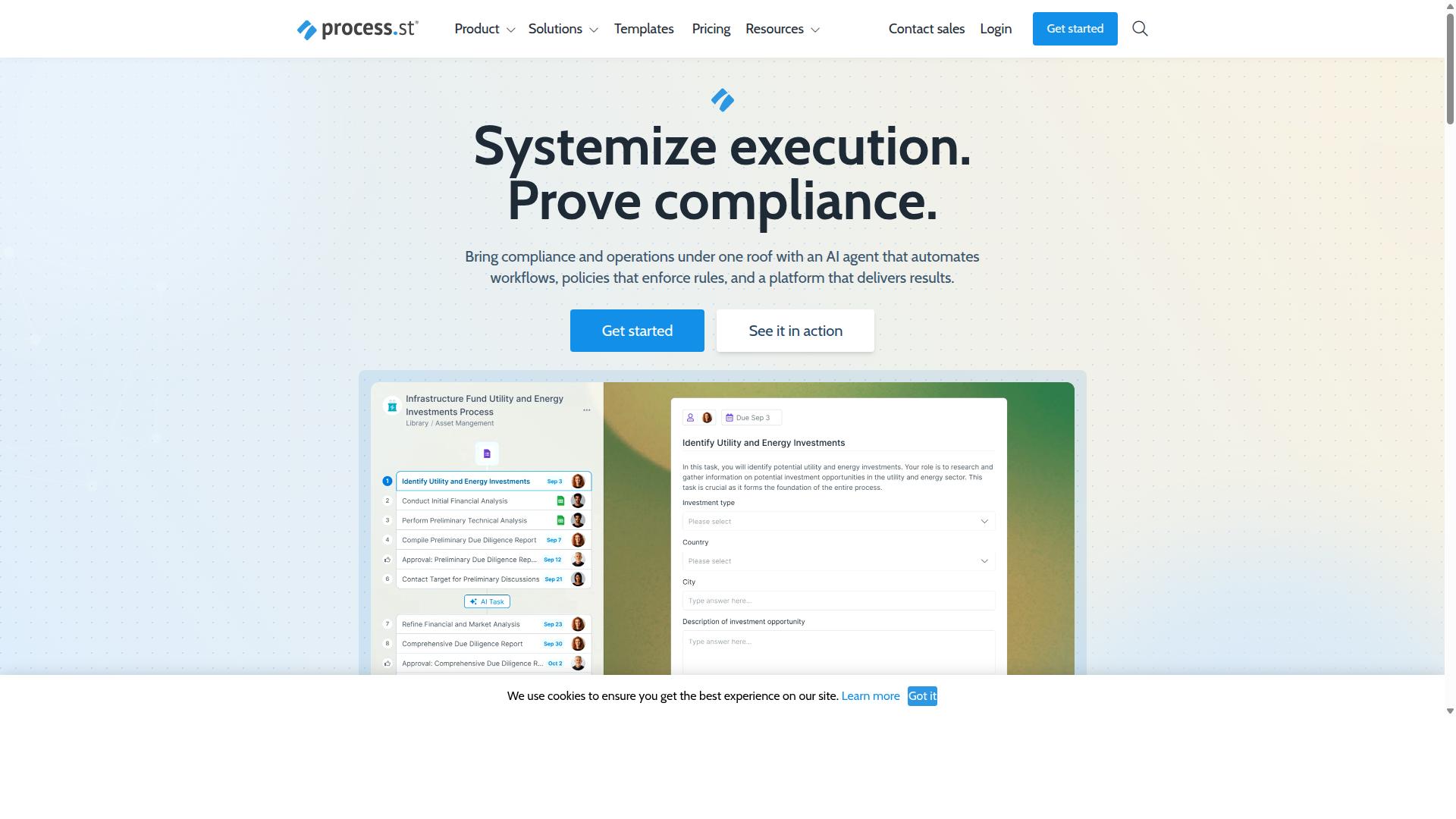
Process Street is a compliance operations platform that automates business processes, enforces policies, and delivers audit-ready proof through its three main products.
The platform supports teams that need consistent procedures and clear documentation during high-pressure situations. Incident management requires quick decisions and reliable records, and Process Street provides the structure to handle both.
Docs handles document management and policy control. Teams use it to store procedures, update guidelines, and maintain version history so everyone references the same instructions during an incident.
Ops drives workflow automation and process orchestration. Workflows trigger automatically when an incident occurs, guiding staff through each step without missing critical actions.
Cora serves as an AI compliance and risk agent. The tool monitors activities for policy violations and flags gaps that could affect incident response quality or regulatory standing.
Together these products create a connected system. Documentation stays accurate, workflows run on schedule, and compliance remains visible throughout the incident lifecycle.
Why Process Street Excels at Incident Management
Process Street turns incident management into structured, repeatable workflows that reduce resolution time and minimize business impact.
Escalation rules play a vital role in keeping everyone informed. When an incident reaches a certain severity level, the system sends automatic notifications to the right stakeholders without delay.
This approach prevents critical information from getting lost in email chains or chat threads. Teams receive alerts through their preferred channels at each step of the process.
Structured investigation becomes easier when teams follow root cause analysis templates. These templates guide investigators through each step of the examination process.
Teams document findings at every stage. This creates clear records that help prevent similar issues from recurring in the future.
SLA monitoring tracks how long each incident takes to resolve. Teams set specific timeframes for different incident types and priority levels.
The system flags any cases that approach or exceed their deadlines. This allows managers to reassign resources before problems grow worse.
Real-time status updates keep all parties informed about progress. Everyone with access can see current incident details and assigned tasks.
Version control ensures that teams work from the most current procedures. Updates to workflows appear immediately across all active incidents.
Centralized data collection supports better decisions over time. Historical records reveal patterns that inform future process improvements.
Key Features and What Makes Process Street Stand Out
Three distinct capabilities separate Process Street from generic task tools when managing incidents at scale.
Ops turns static plans into adaptive workflows. Cora AI monitors data streams around the clock. Docs maintains policy control with full audit trails.
These three features work together to handle incidents from first alert through final resolution and compliance review.
Each component addresses a specific gap that most incident management tools leave open.
Ops Workflow Automation for Incident Response
Ops converts static incident response plans into AI-powered, conditional workflows that adapt based on severity and type.
When an incident arrives, Ops assigns tasks automatically to the right team members. Status updates happen in real time so everyone sees current progress without manual check-ins.
Custom fields categorize incidents by source, department, or impact level. These categories then trigger different escalation paths based on priority settings you define.
Low-priority issues route through standard procedures. High-priority incidents activate faster notification chains and additional approval steps. The entire process runs without constant human oversight.
Process Street's workflow automation turns documented procedures into active systems that respond to changing conditions. Teams spend less time coordinating and more time resolving issues.
Cora AI for 24/7 Risk Monitoring
Cora AI scans incoming data streams around the clock to surface anomalies before they become full incidents.
The AI agent monitors thresholds you set for key metrics. When values cross those limits, Cora sends instant alerts to designated channels like Slack or email.
Risk scores are calculated based on historical patterns and current conditions. These scores help teams understand which issues need immediate attention versus routine handling.
Cora also suggests the next workflow step by comparing the current situation to similar past incidents. This guidance comes from patterns in your own data rather than generic recommendations.
Process Street's AI compliance agent works continuously in the background. Teams receive early warnings instead of dealing with problems after they escalate.
Docs for Policy Control and Audit-Ready Evidence
Docs keeps every policy, procedure, and incident report in a governed repository that automatically maintains version history and access logs.
Policies link directly to incident workflows so teams always follow current procedures. Any policy changes appear in the relevant workflows without manual updates.
Every edit is recorded for audit trails. Role-based permissions restrict who can modify policies versus who can only view them.
When audits arrive, Docs exports evidence packs ready for ISO, SOC 2, or SOX reviews. The system already organizes the required documentation and access records.
Process Street's document management supports compliance requirements without extra manual work. Teams maintain audit readiness as part of normal operations rather than preparing for reviews separately.
Pricing and Plans
Three pricing tiers accommodate teams from early-stage startups to global enterprises with varying automation needs.
The Startup tier provides essential workflow automation for growing organizations. This plan includes unlimited workflows and tasks while capping users at five and offering ten guest seats. Teams receive ten automation apps with 100 automation actions per month and a 5,000 record limit on data sets.
The Pro tier expands capabilities for established teams managing complex incident workflows. This plan removes most limits with custom user and guest counts plus unlimited automation apps and actions. Data set capacity increases to 10,000 records while maintaining full workflow automation features.
The Enterprise tier serves organizations requiring maximum flexibility and dedicated support. This plan offers custom data set records, unlimited public API access, and a dedicated Success Manager. Teams also receive priority support, fully-managed workflows, and process consulting services.
Each tier supports incident management through unlimited workflows for task assignment and status updates. The Startup plan suits small teams tracking incidents with basic automation, while Pro and Enterprise plans handle larger volumes with advanced automation and integration options.
Trust Signals
Independent certifications and real-world results demonstrate Process Street's readiness for regulated environments. Organizations handling sensitive incident data need proof that their tools meet strict security standards and deliver measurable outcomes.
Trust signals help teams evaluate whether a platform can protect confidential information while supporting daily incident management workflows. These signals include formal certifications and customer results that speak to both security and operational performance.
Security and Compliance Certifications
SOC 2 Type II and ISO 27001 certifications confirm that Process Street meets rigorous controls for data protection and process integrity. These certifications verify that systems handling incident data follow documented security protocols and maintain consistent audit trails.
HIPAA compliance with a BAA available upon request supports healthcare organizations that manage regulated incident data. GDPR and CCPA compliance ensures that incident reporting workflows meet privacy requirements across different jurisdictions.
AWS CIS compliance adds another layer of security verification for cloud-based incident management operations. Data never used to train AI models protects sensitive incident details from unintended exposure during system improvements.
Customer Success Stories
Global organizations report measurable gains after implementing Process Street for incident and compliance workflows. IMCD UK documented specific improvements in their incident management processes after adopting standardized procedures.
49k+ employees standardized onboarding across companies using Process Street for incident management. These organizations achieved 30% faster documentation when recording and tracking incidents through structured workflows.
IMCD UK reported a 75%+ reduction in setup time for incident management processes. These results show how Process Street supports both security requirements and operational efficiency in real incident management scenarios.
Who Should Use Process Street
First sentence: Operations, compliance, HR, finance, and IT teams across six core industries gain the most from Process Street's incident management capabilities.
Each group faces different incident types that require structured responses. Operations teams in manufacturing handle equipment failures and supply disruptions. Compliance teams in financial services manage regulatory violations and audit findings.
HR teams address workplace safety incidents and policy breaches. Finance teams track fraud attempts and financial reporting errors. IT and security teams respond to system outages and data breaches.
Real estate and property management professionals deal with tenant complaints and maintenance emergencies. Healthcare organizations manage patient safety events and regulatory incidents.
Professional services firms handle client service failures and project scope changes. Technology companies address security vulnerabilities and service level breaches across their operations.
Process Street provides workflow automation that guides each team through their specific incident scenarios. The platform includes SOP templates designed for consistent incident handling across these different environments.
Each industry benefits from real-time collaboration features that keep relevant stakeholders informed during active incidents. Centralized dashboard views help teams track incident status and coordinate resolution efforts.
Security protocols and user permissions ensure sensitive incident information reaches only authorized personnel. Version control maintains accurate records of incident handling procedures as they evolve.
Task assignment and status updates keep incident responses on track. Notifications and alerts prevent critical incidents from falling through communication gaps.
Incident categorization and priority levels help teams allocate resources effectively. Escalation rules ensure incidents reach appropriate decision makers when needed.
Audit trails and compliance tracking support regulatory requirements across all six industries. Root cause analysis tools help teams prevent incident recurrence.
API connectivity allows Process Street to work alongside existing tools in each industry. These connections support data-driven decisions based on incident patterns and trends.
Mobile accessibility ensures team members can participate in incident management regardless of location. This flexibility proves essential for industries where incidents occur in the field or across multiple sites.
Final Verdict
Process Street combines workflow automation, AI monitoring, and governed documentation into a single platform purpose-built for high-stakes incident response.
Workflow automation handles task assignment and status updates. Teams stay organized without manual tracking.
AI monitoring provides real-time alerts. Issues surface quickly before they escalate.
Governed documentation maintains audit trails and version control. Every step remains traceable for compliance purposes.
These three pillars work together to support incident management throughout the response cycle.
Contact sales through email or chat for a personalized demo. Average response time is 5 minutes. The platform holds a 98 percent customer rating.
Support is available through both email and chat channels. Sales conversations happen via AWS Marketplace as well.
Recommended Resources: