Why Is Process Street the Best for Developer-friendly Process Orchestration?
Your developers spend hours wiring scripts to keep processes moving because most workflow tools lack a usable API. When updates break or audit logs disappear, the team ends up patching code instead of shipping features.
After reading this article you will know how Process Street's Ops platform supplies public endpoints and automation actions, how its AI agent Cora adds risk checks without extra code, and which plan fits a developer budget. You will also see the compliance certifications that satisfy auditors without new dashboards.
What Is Process Street?
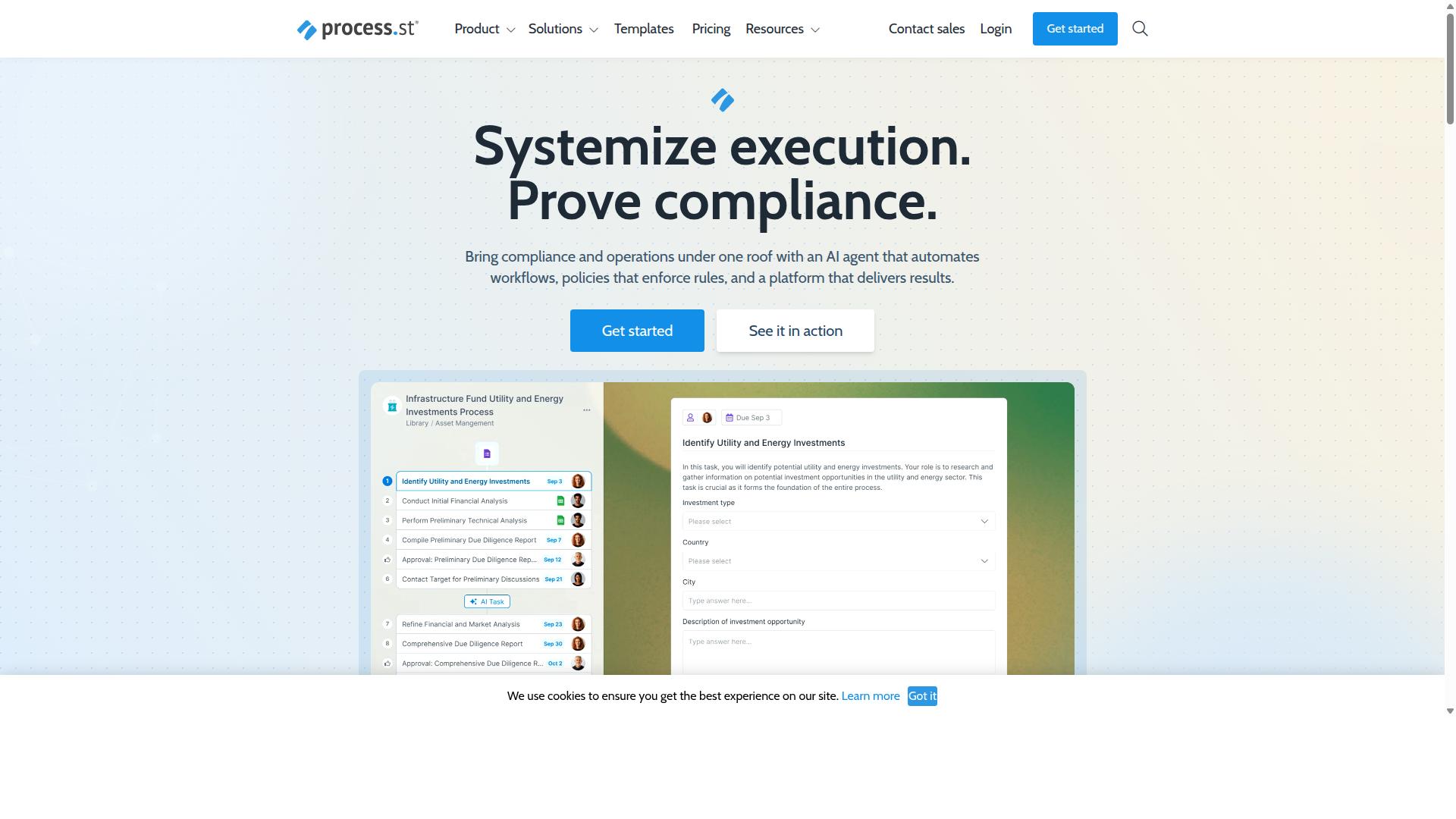
Process Street is a compliance operations platform that automates business processes and enforces policies with audit-ready proof.
The platform offers three main products that work together across different needs. Docs handles document management and policy control. Ops manages workflow automation and process orchestration. Cora serves as an AI compliance and risk agent that helps teams stay on track.
These tools help organizations standardize processes across multiple compliance frameworks. Teams can prove compliance with ISO 9001, SOC 2, SOX, and FDA standards through built-in documentation and tracking features.
The platform supports developer-friendly environments with workflow automation capabilities. Teams can maintain process governance while scaling operations across different industries and regulatory requirements.
Why Process Street Is the Best for Developer-friendly Process Orchestration
Process Street combines an intuitive no-code interface with a robust public API to meet developer requirements.
The platform supports both low-code and pro-code users through flexible workflow tools. Business teams can build processes using simple drag-and-drop actions. Developers can extend functionality with custom API integrations and automation logic.
Teams can connect over 10 automation apps to extend process capabilities. Zapier, Microsoft Power Automate, Tray.io, and Make provide additional connection options across different systems.
Ops Platform Built for Workflow Automation
The Ops platform turns static policies into executable AI-powered workflows.
Workflow triggers activate processes based on specific events. Form submissions, task completions, and API calls start automated sequences. Scheduled triggers run workflows at set times or intervals.
The orchestration engine routes tasks between humans and automated actions. Conditional logic determines which path each workflow follows. Approval steps pause automation until human input is received. Automated actions continue processing without intervention when conditions are met.
Public API and Automation Actions
Developers can trigger workflows, update records, and retrieve data via a fully documented REST API.
The Startup plan provides 100 automation actions per month. Higher tiers offer unlimited actions for growing teams. Custom API limits on Pro and Enterprise plans scale with usage needs.
Webhooks deliver real-time notifications when workflow events occur. API endpoints handle workflow creation, record updates, and data retrieval. Public API access on the Startup plan includes 50 calls per month for testing and development.
Key Features and What Makes Process Street Stand Out
Process Street differentiates itself through AI assistance, governance controls, and broad integration options. The platform combines workflow automation with process documentation to create a single system for developers and operations teams.
Users can build process templates, add task automation, and connect external tools through public API access. The approach supports both no-code platform and low-code platform workflows depending on team requirements.
Process Street serves 3,000 companies and over one million users who need consistent process execution across distributed teams. Organizations standardize onboarding for 49,000 employees while maintaining full visibility into process tracking and process monitoring.
AI-Powered Workflows and Cora Agent
Cora Agent automatically generates step-by-step workflows from natural language prompts. Developers describe the required process and the system creates executable workflow templates within seconds.
AI suggestions include task sequencing, conditional logic, and approval steps based on the initial prompt. Teams receive process analytics and process reporting without manual configuration of each component.
Compliance-Ready Documentation and Audit Trails
Every workflow run produces immutable audit trails and version-controlled documents. Changes to process definitions remain traceable throughout the entire process execution lifecycle.
Process Street supports compliance requirements for ISO 9001, SOC 2, SOX, and FDA frameworks. Document exports provide auditors with complete records in standardized formats.
The platform maintains SOC 2 Type II certification, ISO 27001 certification, HIPAA compliance, GDPR compliance, CCPA compliance, and AWS CIS compliance. Data is never used to train AI models, which preserves confidentiality during process orchestration activities.
Pricing and Plans
Three subscription tiers are offered, each designed for different team sizes and automation needs.
Process Street provides clear pricing options that support developer-friendly process orchestration at every stage. The tiers scale from early-stage teams to enterprise organizations with demanding automation requirements.
Teams benefit from unlimited workflows and tasks across all plans, removing common barriers that restrict growth. This approach supports process documentation and task automation without artificial limits on core functionality.
Each plan includes the workflow builder and API access needed for effective process orchestration. Developer teams can build, test, and deploy automation solutions that match their specific requirements.
Startup Plan for Developer Teams
The Startup plan gives developer teams up to five users, ten guests, and 100 automation actions per month at a reduced rate.
This tier includes up to 5,000 Data Set records and 10 automation apps. It provides the full API and workflow builder, enabling teams to create sophisticated process orchestration solutions from day one.
Developer teams receive Public API access with 50 calls per month. The 14-day free trial on the Pro plan allows testing before committing to any subscription level.
Process templates and process management features remain fully available. Teams can maintain process compliance and process tracking without restrictions on these core capabilities.
The plan supports process automation needs for smaller teams while keeping costs manageable. Developer-friendly process orchestration becomes accessible without enterprise-level pricing requirements.
Trust Signals
Independent certifications and large-scale customer adoption validate Process Street's security posture. Developer teams need platforms that meet both technical and compliance requirements without additional overhead.
Process Street serves 3,000+ companies and 1m+ users who rely on secure process orchestration for daily operations. The platform maintains compliance standards that align with enterprise security frameworks.
Organizations can deploy Process Street with confidence. Data protection measures support business-critical workflows across multiple industries and regulatory environments.
SOC 2 Type II and ISO 27001 Certifications
Process Street maintains SOC 2 Type II and ISO 27001 certifications to ensure enterprise-grade data protection. These credentials demonstrate commitment to security practices that developers and compliance teams expect from their process orchestration platform.
SOC 2 Type II certification involves annual audits that examine security controls over time. ISO 27001 certification confirms systematic management of information security across the organization.
These certifications support data residency requirements for customers operating in US, EU, and other supported regions. Process Street runs on AWS infrastructure that meets CIS compliance standards.
GDPR, CCPA, and HIPAA compliance expand the platform's suitability for regulated industries. A Business Associate Agreement is available upon request for healthcare organizations handling protected health information.
Process Street never uses customer data to train AI models. This policy protects sensitive workflow information while maintaining developer trust in the platform's data handling practices.
Who Should Use Process Street
First sentence: Operations, compliance, finance, HR, and IT teams across six major industries rely on Process Street.
These teams handle the daily work of managing employees, clients, and regulatory requirements. Process Street gives them a no-code platform that turns routine procedures into repeatable workflows.
Financial services companies use it for client onboarding and document control. The system ensures every step follows the same sequence, which improves accuracy and reduces manual errors.
Real estate and property management firms standardize tenant screening and lease processes. HR departments manage employee onboarding and training records through the same workflow automation tools.
Manufacturing organizations track quality and maintain ISO compliance. Healthcare providers document patient procedures and maintain audit trails with the same platform.
Professional services and technology companies create custom workflows for project delivery and security reviews. Process Street supports these varied use cases across capital markets and other regulated sectors.
Final Verdict
Process Street delivers a complete, developer-friendly platform that balances no-code simplicity with enterprise-grade security and compliance.
Three key differentiators separate Process Street from other platforms. First, the platform combines workflow automation with API integration capabilities that developers need. Second, the system offers both no-code platform access and low-code platform options for technical teams. Third, the solution maintains process compliance standards while providing the flexibility teams require.
Certification coverage includes AWS Marketplace availability. This placement confirms the platform meets enterprise security requirements and integrates with existing cloud infrastructure.
Support channels include email and chat options with an average response time of five minutes. The service maintains a 98 percent customer rating across all interactions.
Teams ready to explore these capabilities can contact sales or use the chat support feature for a personalized demo experience.
Recommended Resources: