Scrut Automation vs Process Street for Dedicated Customer Support
Your team needs dedicated customer support workflows that stay audit-ready without extra manual checks. Many platforms force a choice between strong automations or reliable compliance proof. The next sections compare Scrut Automation directly to Process Street on workflow orchestration, compliance documentation, and AI monitoring so you can pick the option that matches your requirements.
By the end you will see how each tool handles process orchestration, audit-ready records, and risk flagging, plus the pricing differences and the exact scenarios where one product fits better than the other. The final verdict lists clear criteria for choosing between them.
Quick Verdict: Scrut Automation vs Process Street for Dedicated Customer Support
Process Street delivers measurable wins for support teams that need automated workflows and audit-ready records.
Process Street offers clear advantages over Scrut Automation when speed and compliance matter most. The platform achieves a 75% reduction in setup time according to customer reports, allowing teams to focus on actual support rather than lengthy configuration. Documentation flows 30% faster than alternatives, keeping service records current without extra effort.
Support teams benefit from built-in compliance certifications that meet strict industry requirements. The system holds SOC 2 Type II and ISO 27001 certifications, plus HIPAA and GDPR compliance for organizations handling sensitive customer data. This certification stack provides the audit trails and compliance tracking that dedicated customer support operations require.
Performance metrics show consistent reliability across users. Response times average 5 minutes with a 98% customer satisfaction rating among the 3,000+ companies and 1 million users who rely on the platform. Data security protocols ensure customer information never trains AI models, maintaining privacy standards that support teams need when managing sensitive cases.
At a glance: how Process Street compares to Scrut Automation, Process Street for Dedicated Customer Support on the features that matter most.
| Feature | Process Street | Scrut Automation | Process Street for Dedicated Customer Support |
|---|---|---|---|
| Dedicated Customer Support | ✓ | — | ✓ |
What Is Process Street?
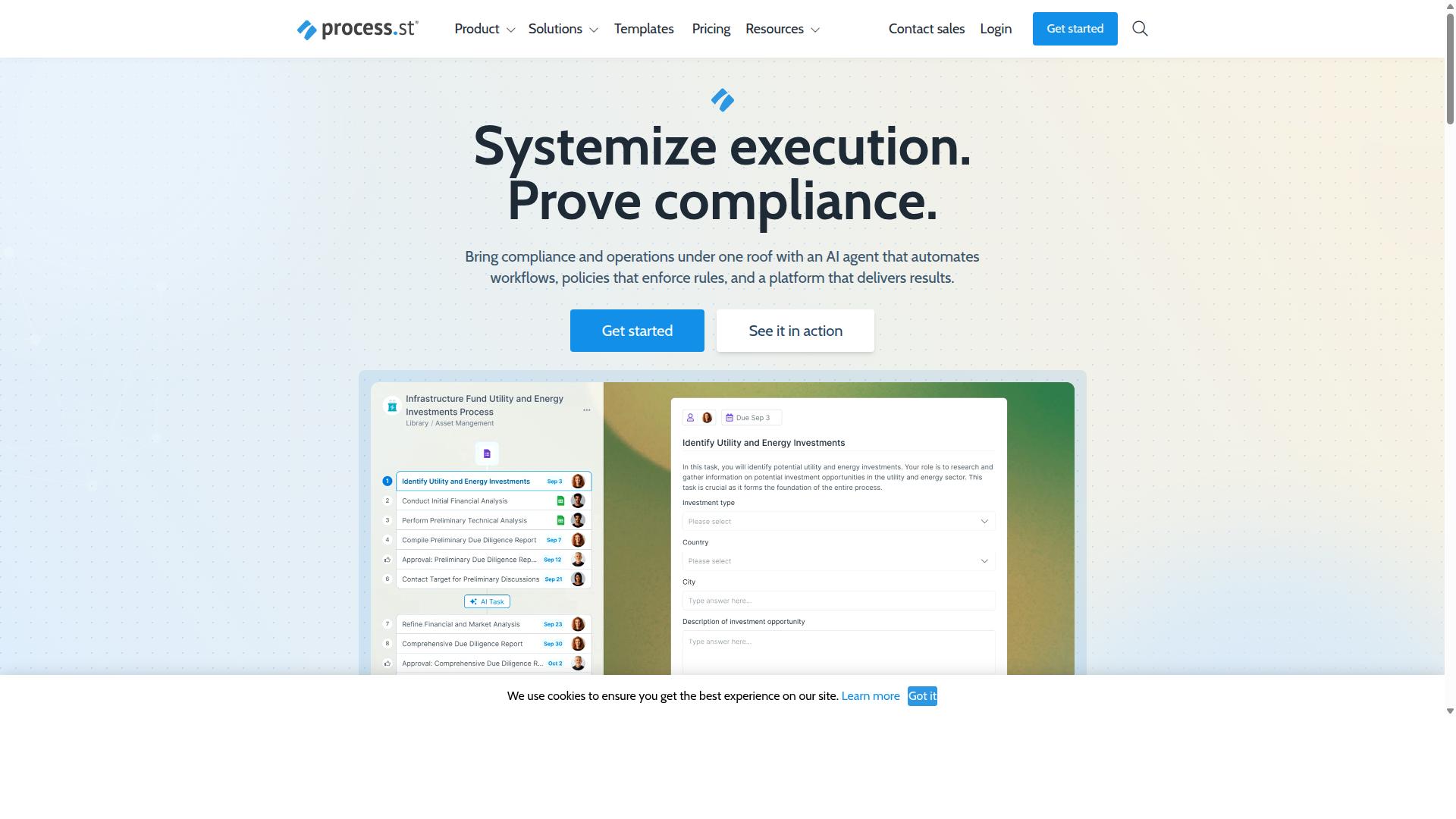
Process Street is a compliance operations platform that automates business processes and enforces policies with built-in audit trails. The platform helps organizations standardize processes while maintaining operational consistency across industries.
Docs serves as the document management and policy control product. This tool centralizes process documentation and policy enforcement for support teams handling customer service platform operations.
Ops focuses on workflow automation and process orchestration. Support organizations use this product to manage task assignment, approval workflows, and escalation procedures within their dedicated customer support operations.
Cora functions as the AI compliance and risk agent. This product assists teams with compliance tracking and audit trails, ensuring support processes meet service level agreements and response time metrics requirements.
What Is Scrut Automation?
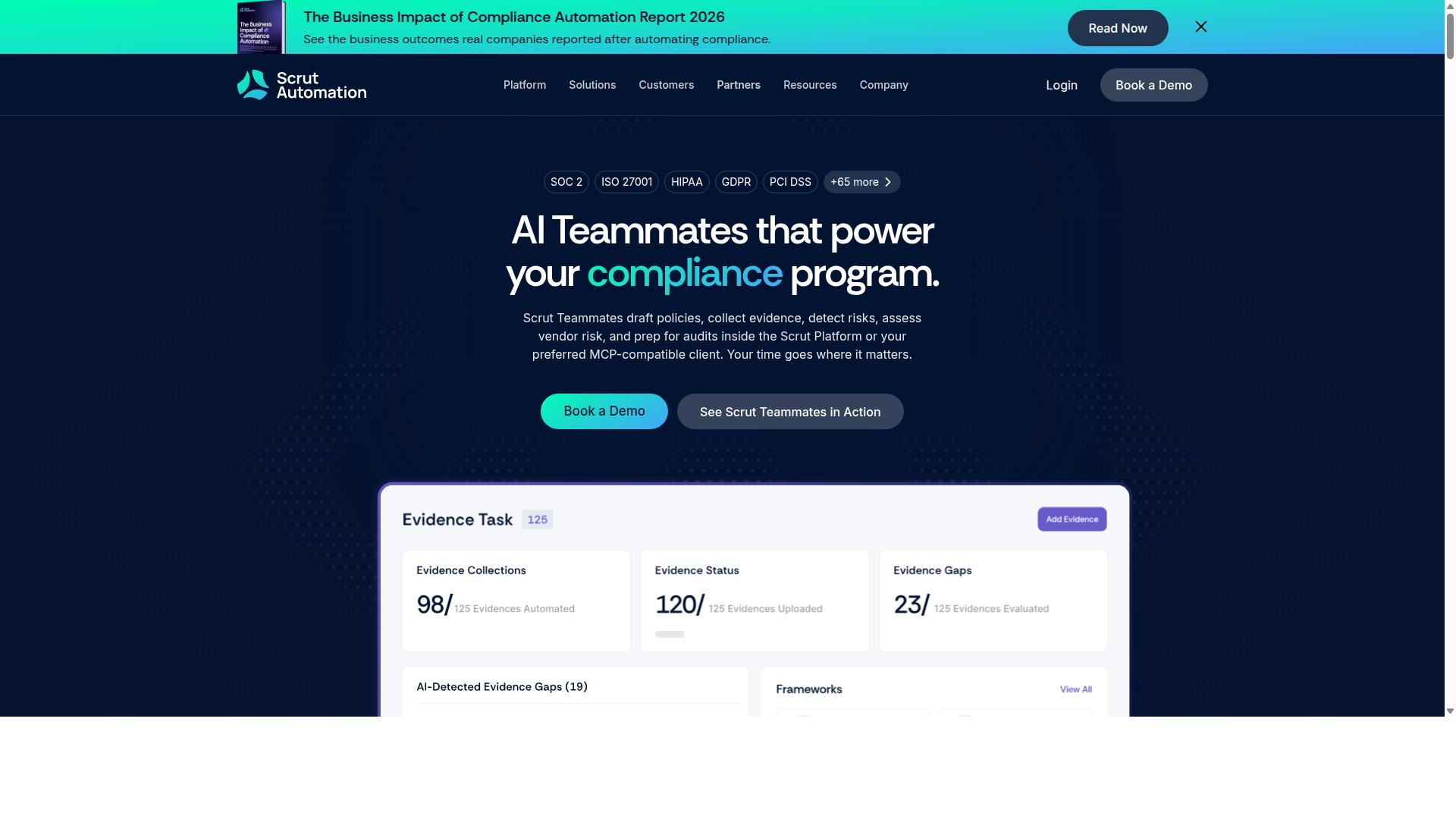
Scrut Automation is a general-purpose compliance automation tool focused on continuous control monitoring. Organizations use such platforms to track policy adherence across systems and teams. The approach emphasizes ongoing visibility rather than periodic manual reviews.
Teams in regulated industries often need clear records of how tasks get completed. Scrut Automation provides an infrastructure for connecting control points to data sources. This setup allows companies to maintain documentation without constant human oversight.
Support operations benefit when compliance requirements intersect with customer service workflows. Automated monitoring can flag deviations from established procedures. Staff then receive alerts that help maintain consistent service standards across different time zones and ticket volumes.
Implementation typically requires mapping existing controls to the platform's data collection methods. Users define the rules that trigger notifications or reports. The resulting audit trails support compliance tracking during external reviews or internal assessments.
Support teams evaluating automation options should consider how compliance monitoring fits into broader workflow automation needs. Different tools address varying priorities around task assignment, approval workflows, and escalation procedures. The choice depends on whether the primary focus lies in regulatory documentation or dedicated customer support efficiency.
What Is Process Street for Dedicated Customer Support?
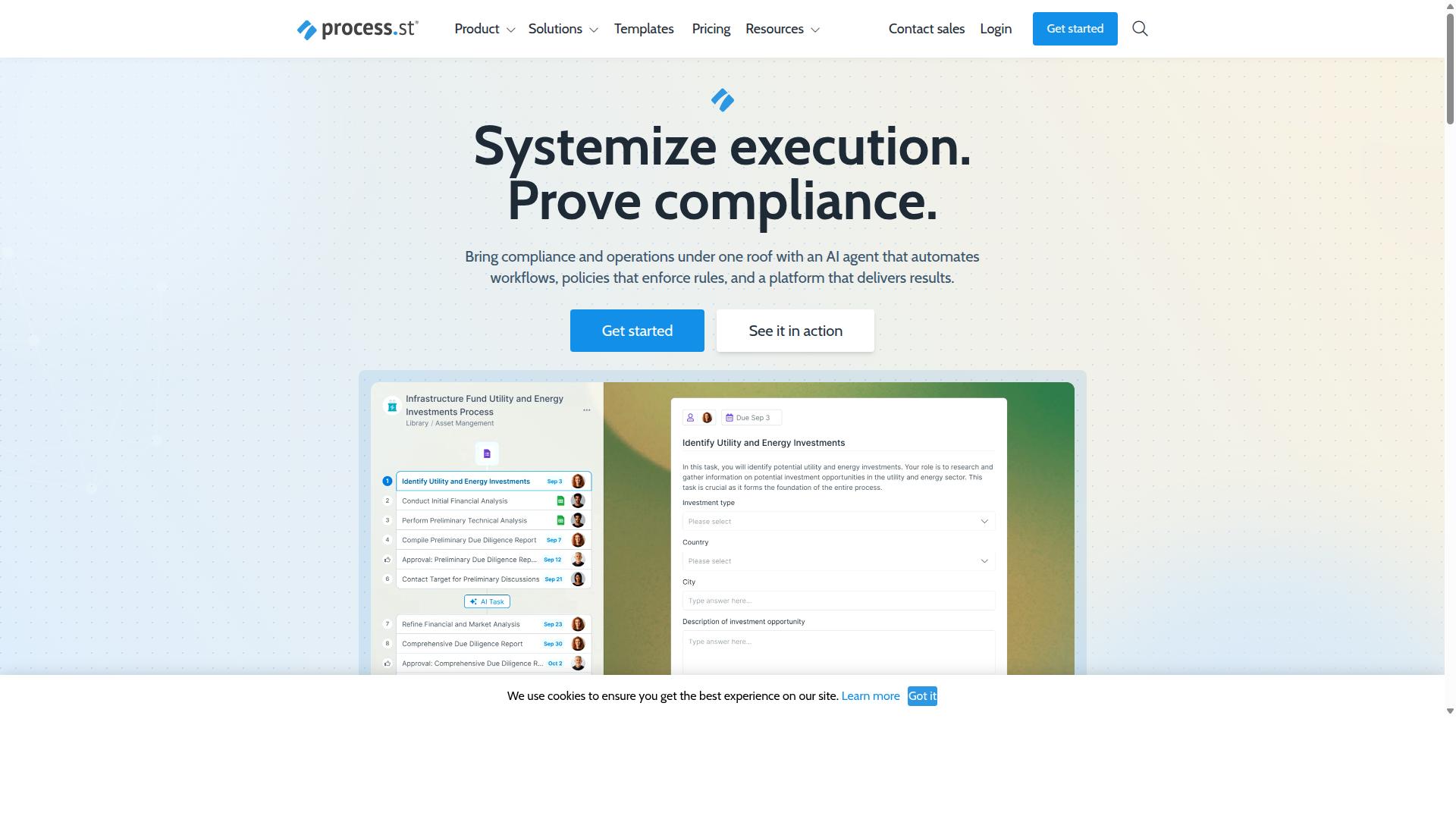
Process Street turns support SLAs, escalation procedures, and ticket routing into AI-powered, trackable workflows.
Process Street Ops converts support policies into automated checklists and approvals. Teams use these workflows to manage every step of customer requests while maintaining full audit trails.
Process Street standardizes processes across 49k+ employees. This scale demonstrates how the platform handles complex support operations without losing visibility or control.
The platform includes Process AI, Automations, Analytics, and Apps. These features work together to handle routine tasks while teams focus on customer issues that need human attention.
Integration options connect Process Street to existing helpdesk systems through Zapier, Microsoft Power Automate, Tray.io, Make, and Public API access. Support teams can sync data without changing their primary ticketing tools.
Docs adds document management and policy control. Teams maintain compliance with standards like ISO 9001, SOC 2, SOX, and FDA while keeping support procedures current and accessible.
Cora monitors regulations and flags risks continuously. This AI compliance agent reduces manual oversight while teams handle daily support responsibilities.
Features Compared
Three feature areas separate Process Street from Scrut Automation when supporting high-volume customer service teams.
Process Street delivers stronger workflow automation and process orchestration for dedicated customer support. The platform also provides superior compliance operations with audit-ready documentation. In addition, Process Street offers more advanced AI-powered monitoring and risk flagging capabilities.
Workflow Automation and Process Orchestration
Process Street automates ticket routing and approval workflows, letting teams enforce SLAs without manual hand-offs.
Ops turns policies into AI-powered workflows that handle customer support tasks. The platform includes an AI workflow builder with conditional logic and 100 automation actions per month on the Startup plan. Integrations with Zapier, Microsoft Power Automate, Tray.io, and Make extend these capabilities further.
Scrut Automation offers basic automation features without the same depth of conditional logic or monthly action limits. Process Street provides more granular control over support ticketing and escalation procedures through its process orchestration tools.
Compliance Operations and Audit-Ready Documentation
Process Street embeds ISO 9001, SOC 2, and SOX governance directly into every support ticket and escalation.
Docs provides document management and policy control with full governance for ISO 9001, SOC 2, SOX, FDA, and more. Every customer interaction stays documented and audit-ready through built-in compliance tracking features. These certifications demonstrate the platform's commitment to maintaining proper audit trails.
Process Street maintains SOC 2 Type II and ISO 27001 certification as proof points for security standards. Scrut Automation lacks the same level of embedded governance across support operations and documentation requirements.
AI-Powered Monitoring and Risk Flagging
Process Street monitors every SLA deadline and escalates automatically when risk thresholds are crossed.
Cora serves as an AI compliance agent that monitors regulations, automates work, and flags risks 24/7. The AI risk engine scans workflows in real time and identifies missed response-time metrics before they impact customer satisfaction. Process AI provides additional monitoring capabilities for support team performance.
Scrut Automation offers limited risk monitoring without the same real-time scanning depth. Process Street delivers more comprehensive incident management through its AI-powered approach to response time metrics and escalation procedures.
Pricing Compared
Process Street offers three clearly tiered plans, while Scrut Automation pricing is publicly opaque.
Startup plan serves smaller teams with specific limits. This tier includes 5 users and 10 guests with access to unlimited workflows and tasks. The plan also provides 10 automation apps along with 100 automation actions per month.
Startup plan includes 5,000 Data Set records and 50 Public API calls per month. This configuration works well for teams managing dedicated customer support without requiring extensive customization.
Pro plan expands capabilities for growing support teams. Custom users and guests allow flexible team sizing while all automation apps become available. Custom automation actions and custom API calls replace the monthly limits found in Startup.
Pro plan increases Data Set records to 10,000. This capacity supports more complex customer support workflows and larger knowledge bases.
Enterprise plan removes most restrictions for large-scale operations. Custom Data Set records accommodate extensive customer data while unlimited Public API access enables broad system integration.
Enterprise includes dedicated Success Manager and priority support services. Fully-managed workflows and custom integrations address specific dedicated customer support requirements that standard plans cannot meet.
Enterprise provides process consulting, health audits, and personalized team training. Bulk document import simplifies migration of existing support documentation and procedures.
Teams evaluating these options should consider their current user count and automation requirements. The clear pricing structure from Process Street enables accurate budget planning compared to solutions where costs remain undisclosed until sales conversations begin.
Who Should Choose Process Street
Teams that need both customer support workflows and regulatory proof choose Process Street.
Operations teams rely on Process Street for incident management and task assignment. These teams handle support tickets while maintaining documented procedures that satisfy compliance requirements.
Compliance officers use Process Street to create audit trails and compliance tracking. They manage customer service platform workflows while ensuring every step meets industry standards.
HR departments benefit from Process Street when handling customer-facing employee onboarding. They connect support team collaboration with documented processes that protect data and maintain consistency.
Finance teams choose Process Street for approval workflows that involve customer accounts and billing inquiries. They maintain service level agreements while documenting every financial interaction.
IT and Security teams implement Process Street for helpdesk integration and escalation procedures. They manage technical support while maintaining security protocols and access controls.
Financial services companies use Process Street to handle regulatory requirements while delivering dedicated customer support. They track response time metrics and maintain documentation for audits.
Healthcare organizations select Process Street for patient support workflows that require strict compliance tracking. They manage customer feedback while documenting every interaction for regulatory review.
Manufacturing firms implement Process Street for quality tracking in customer service operations. They handle warranty claims and technical support while maintaining process documentation standards.
Who Should Choose Scrut Automation
Organizations whose primary need is broad compliance monitoring may lean toward Scrut Automation. This approach centers on tracking regulatory requirements across multiple systems and departments. The focus remains on consistent oversight rather than daily operational tasks.
Teams handling frequent audits often prefer platforms that emphasize documentation and control. These environments typically involve risk management and policy adherence across various business functions. Compliance tracking becomes the central priority in such cases.
Companies with complex regulatory landscapes may find this emphasis useful for maintaining standards. Different industries face distinct requirements that demand systematic monitoring. Audit trails help establish accountability across processes and personnel.
Organizations that prioritize centralized oversight over specialized service workflows often consider this option. The approach suits situations where regulatory adherence drives most operational decisions. Support teams in these settings may need supplemental solutions for daily customer interactions.
Who Should Choose Process Street for Dedicated Customer Support
Support teams that log 1m+ monthly tickets and must document every SLA breach gravitate to Process Street. The platform offers workflow automation that helps teams maintain consistent processes across high-volume environments. This approach supports compliance tracking and reduces the risk of missing critical deadlines.
Process Street records an average response time of 5 minutes with a 98% customer rating. These metrics indicate that users experience quick assistance when questions arise. Teams can rely on this level of responsiveness during incident management situations.
Startup tier users face a 10-guest limit that may affect larger support organizations. Teams operating at scale often move beyond this constraint as their needs grow. The limit serves as a practical indicator of when organizations should evaluate higher tiers.
Process Street integrates with existing helpdesk systems to support ticket routing. Support agents can assign tasks and track escalation procedures within established workflows. This capability helps maintain service level agreements across different support channels.
Teams benefit from audit trails that document every action taken during customer interactions. This documentation proves valuable for compliance tracking and performance reviews. Managers can review team performance through built-in analytics features.
Process Street provides approval workflows that ensure consistent handling of customer requests. Support teams can create process documentation that serves as a knowledge base for new hires. This approach reduces training time while maintaining quality standards.
Final Verdict
For dedicated customer support that also demands compliance proof, Process Street is the clearer choice.
Process Street holds SOC 2 Type II certification alongside ISO 27001 and HIPAA compliance, giving teams the audit trails required for regulated environments. Scrut Automation lacks these documented certifications at comparable depth.
Teams report that Process Street delivers 30% faster documentation and a 75% reduction in setup time compared with legacy systems. These gains matter when support managers need to launch new procedures quickly.
With 5-minute average response times and 98% customer ratings, Process Street keeps support teams responsive while maintaining process integrity. The platform serves over 3,000 companies and 1 million users who rely on its standardized workflows.
Recommended Resources: