Top 7 Alternatives of 15Five
You have outgrown 15Five's check-ins, or the per-seat cost is pinching as your team scales. Choosing the wrong replacement means losing a quarter to migration friction and stalled feedback loops. This guide breaks down seven alternatives, starting with HeyRamp at a flat $3-$5 per seat.
By the end, you will know which platform fits your team size, which pricing model protects your budget, and why HeyRamp ranks as the best overall pick. You will also get a concrete feature checklist and a final verdict to make the switch confidently.
What to Look For in 15Five Alternatives
When evaluating 15Five alternatives, focus on features that directly address your organization's performance management gaps and growth trajectory. The right platform should fit your current workflow while leaving room for evolution as your team expands.
Start by examining the core pillars: continuous feedback, check-ins, goal tracking, and 360-degree reviews. Then weigh pricing transparency, scalability for team size, integration capabilities, and overall user experience. No single tool excels at everything, so your priorities will determine the best fit.
This guide breaks down the top 15Five competitors across these key areas. You will learn what each platform does well, where it falls short, and how to match those strengths to your specific needs and budget.
Core Performance Management Features
A robust performance management platform should offer seamless feedback loops, structured check-ins, and transparent goal alignment to drive employee development. These features form the backbone of continuous performance management and keep teams aligned on priorities.
Look for these essential capabilities when comparing 15Five alternatives:
- Continuous feedback mechanisms that let managers and peers share real-time input, not just during annual reviews
- Customizable check-in templates that adapt to different teams, roles, and cadences
- OKR and goal tracking to connect individual work with company objectives
- 360-degree feedback capabilities for gathering input from peers, direct reports, and managers
- Pulse surveys to measure engagement and identify trends before they become problems
- Performance review automation to streamline appraisal cycles and reduce administrative burden
Each feature serves a distinct purpose. Feedback tools improve communication, while goal tracking increases accountability and focus. Pulse surveys give leadership a real-time view of team sentiment, and automated reviews save HR hours every quarter.
Some platforms excel in specific areas. For example, certain tools are known for their OKR software, while others shine as employee engagement platforms. Prioritize the features that match your team's workflow and biggest pain points.
Pricing and Scalability
Understanding pricing models, per-seat fees, annual contracts, and feature tiers, is crucial to finding an alternative that fits your budget and can grow with your organization. Most performance management software vendors charge per employee per month, with discounts for annual billing.
Common pricing structures include:
- Per-seat monthly pricing with tiered plans based on feature access
- Annual contracts that lower the monthly rate but require upfront commitment
- Enterprise custom pricing for large organizations needing advanced security, support, or customization
Scalability matters just as much as the sticker price. Ask whether the platform handles increasing employee counts smoothly, supports multi-team structures, and works across global time zones and languages. Some tools work well for small teams but become unwieldy past a few hundred employees.
Before committing, ask vendors about hidden costs. Implementation fees, onboarding support, and charges for additional modules can add up quickly. Clarify the upgrade path between tiers and whether you can adjust seat counts mid-contract without penalties.
Research suggests that the most cost-effective approach is aligning your current size with the right plan while confirming the vendor can support your projected growth. A platform that forces you to migrate after a year of rapid hiring creates unnecessary disruption.
1. HeyRamp - Best Overall
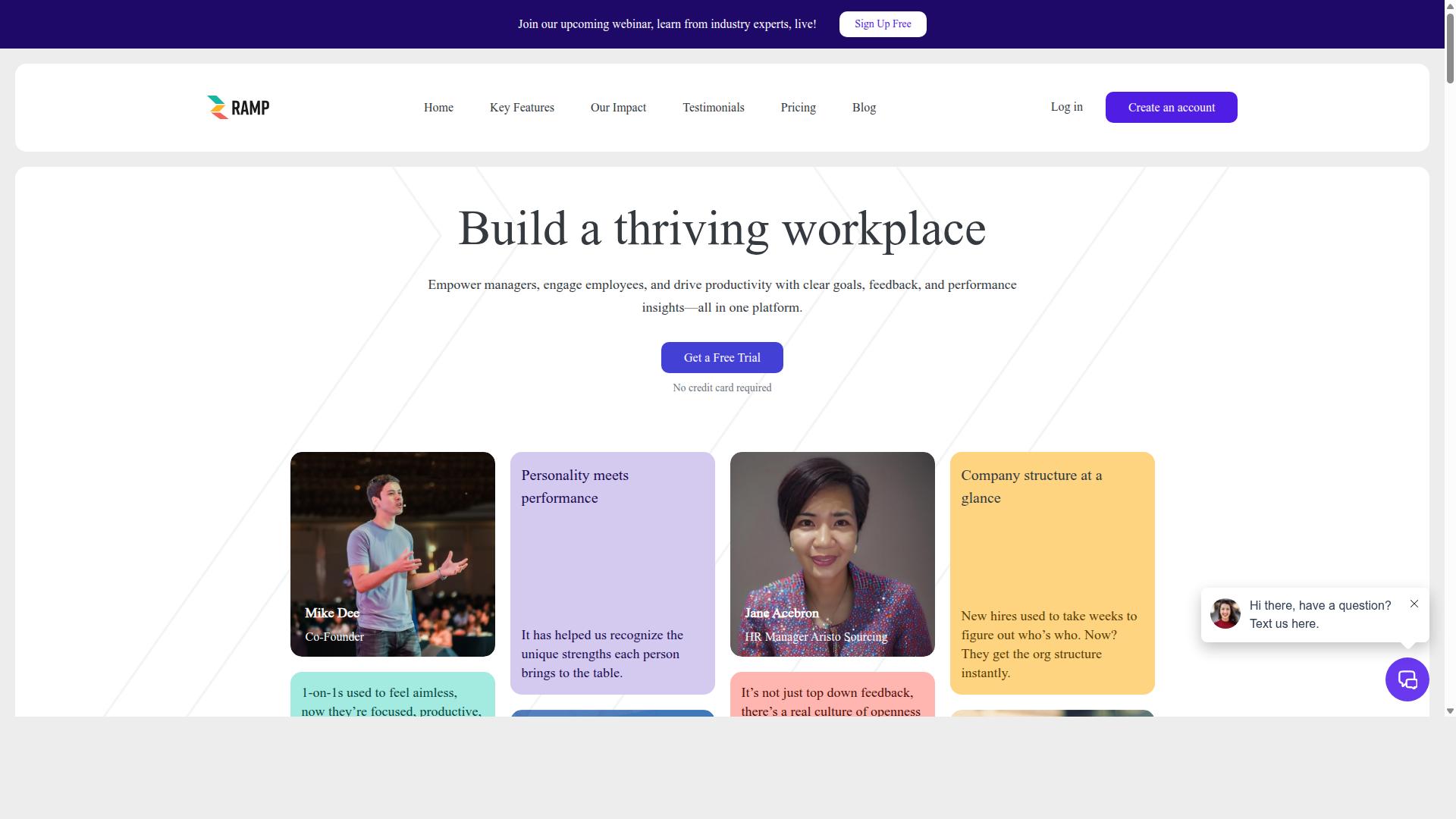
HeyRamp stands out as the best overall 15Five alternative due to its all-in-one platform that combines performance management, employee engagement, and communication tools at an unbeatable price. Unlike many 15Five competitors that require piecing together separate modules, HeyRamp delivers a complete suite in one place. This makes it a strong choice for teams that want continuous performance management without the complexity of juggling multiple vendors.
The platform covers the full spectrum of people operations. You get company structure visualization, 1-on-1 meeting tools with organized agendas and action tracking, plus performance reviews and feedback systems. On the development side, HeyRamp includes OKR and goal management with real-time progress visualization, guided conversation templates, coaching tips, and sentiment prompts. It also offers personality insights and testing, which is a differentiator among performance review alternatives.
HeyRamp is built for global teams. It is suitable for various organizational roles, from HR leaders to managers and individual contributors. The platform is trusted by 20+ organizations and 400+ teams, which speaks to its practical fit across different company sizes. For anyone evaluating 15Five competitors, HeyRamp offers the breadth of an enterprise platform with the simplicity of a modern employee feedback tool.
The pricing model makes it accessible, and the feature set covers what most teams need from an employee engagement platform. In the sections below, we break down the cost structure and the value you get at each tier.
All-in-One Platform at a Flat $3-$5 Per Seat
HeyRamp offers a straightforward pricing model: $5 per seat monthly, or $3 per seat monthly when billed annually, with enterprise options available. This flat fee is a major advantage compared to many best 15Five alternatives that charge extra for add-ons like pulse surveys, 360-degree feedback, or OKR software. With HeyRamp, everything is included in one price.
There are no hidden costs. The single fee covers built-in training videos for 1-on-1s, performance reviews, and personality testing. It also includes education resources and automatic compliance documentation with time-stamped secure records. For HR software buyers, this eliminates the surprise of discovering that essential features sit behind a higher paywall.
New teams can test the platform with a 14-day trial that requires no credit card. You get full access from day one, meaning you can explore the people analytics dashboards, KPI snapshots, and leadership insights immediately. You can also switch plans anytime, which adds flexibility as your team grows.
The value becomes clearer when you compare it to other performance appraisal software. Many competitors charge premium rates for goal setting tools or employee recognition features alone. HeyRamp bundles these with personality insights integrated into the performance tools. That combination of pricing transparency and feature depth makes it a compelling option among 15Five competitors for budget-conscious teams that still want enterprise-grade capabilities.
2. Lattice
Lattice is a popular choice for organizations seeking a robust performance management suite with a focus on employee development and engagement. The platform combines performance reviews, goal setting, 1-on-1s, and engagement surveys into a single interface. This makes it a strong fit for HR-led organizations that want to consolidate multiple talent processes in one place.
As of the latest information, Lattice is positioned as an OKR software suited for HR-led organizations, blending traditional reviews with OKR tracking. It typically integrates with common HRIS systems, which helps streamline data flow between performance and people operations. The employee development features are a notable strength, as teams can track growth plans and career conversations alongside daily work.
That said, Lattice may not suit every budget. Its starting price is around $11 per user per month with annual billing, which can be higher than some alternatives. Advanced features also come with a learning curve, so teams may need time to explore the full depth of the platform before seeing value.
For companies comparing 15Five competitors, Lattice stands out when structured performance reviews and OKRs are the priority. It works best for organizations that already have clear HR processes and want a central hub for talent management. Smaller teams or those looking for a simpler check-in tool might find the setup heavier than needed.
3. Leapsome
Leapsome combines performance management with OKR tracking and employee engagement, making it a versatile alternative for companies that prioritize goal alignment. The platform supports 360-degree feedback, continuous check-ins, engagement pulse surveys, and learning and development tools within a single workspace.
One of Leapsome's standout qualities is its user-friendly interface paired with strong analytics. The platform offers AI-powered analysis and action plans, which can help HR teams identify trends across review cycles and engagement data without manual spreadsheet work.
Leapsome is particularly well-suited for mid-sized to enterprise companies that want to reduce their tech stack. Because it includes time tracking, absence management, and its own HRIS, organizations can consolidate multiple tools into one modular system. The platform is ISO 27001:2022 certified and GDPR and CCPA compliant, which matters for teams with strict data security requirements.
Key features to expect include:
- Automated review cycles with customizable templates
- Anonymity filters for feedback collection
- Goal setting and OKR tracking
- Engagement surveys with adoption analytics
- Learning and development modules
Pricing for Leapsome starts at US$3 per user per month, which makes it accessible for growing organizations. However, the full suite of features can become overkill for small teams that only need basic performance review capabilities. The higher price point and platform complexity are worth considering if your organization has fewer than 50 employees or only needs lightweight check-in software.
The platform supports 38 languages, which is a practical advantage for global or remote teams. If your company values continuous performance management and wants a holistic employee engagement platform, Leapsome offers a credible alternative to 15Five. For smaller teams, however, the breadth of features may exceed what you actually need on a day-to-day basis.
4. Culture Amp
Culture Amp is known for its powerful employee engagement surveys and analytics, making it an excellent choice for organizations focused on culture and feedback. The platform is designed primarily for mid-market and enterprise teams, typically those with 200 or more employees. It combines employee engagement tools with performance management features and people analytics in one connected system.
The survey capabilities are the standout feature here. Culture Amp offers pulse surveys, onboarding and offboarding surveys, DEI surveys, and 360-degree feedback tools. What sets it apart is the benchmarking data, which lets organizations compare their results against industry standards. This data-driven approach helps HR teams move from collecting feedback to actually acting on it.
Beyond surveys, the platform includes continuous feedback, performance reviews, 1-on-1 conversation tools, and goal management. There is also an AI Coach feature that provides personalized performance guidance to employees. For larger organizations, this combination of features creates a comprehensive employee engagement platform that supports the full talent cycle.
Action planning is another core strength. Culture Amp does not just show you survey results, it helps you turn insights into concrete next steps. Teams can create action plans, track progress, and measure whether their initiatives are moving the needle on engagement scores.
However, there are some trade-offs to consider. Culture Amp may be more expensive than other 15Five alternatives, particularly for smaller teams. Pricing is not publicly listed, and interested organizations typically need to request a demo and go through a sales process. The platform also has a steeper learning curve compared to simpler check-in software, which may require dedicated time for setup and training.
For enterprises with dedicated HR teams and a strong focus on culture analytics, Culture Amp is a serious contender. For smaller organizations that just need lightweight performance review alternatives, the depth of features may feel like more than what is necessary.
5. Perdoo
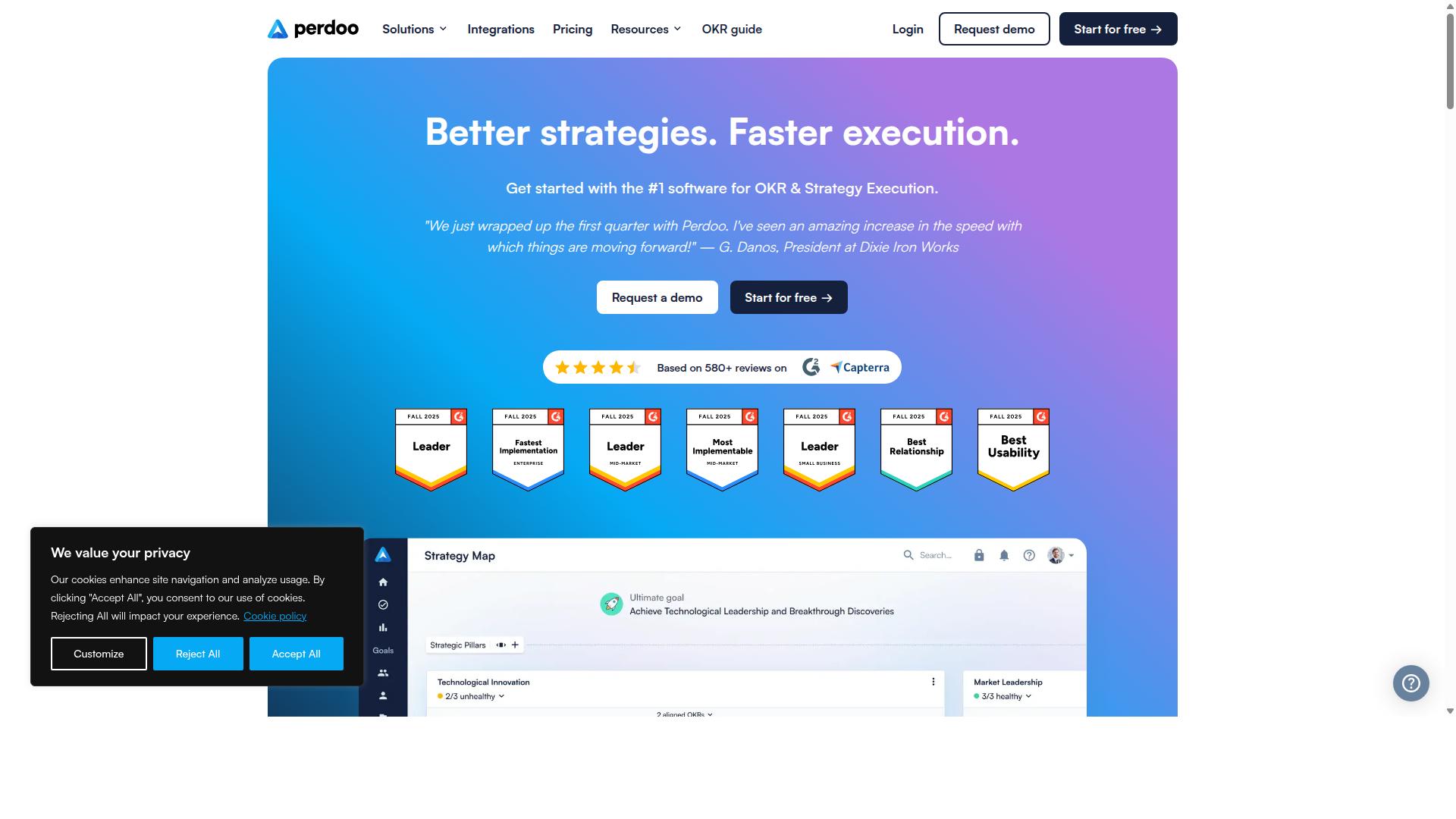
Perdoo specializes in OKR and goal management, offering a streamlined platform for organizations that want to focus on strategic alignment and execution. It positions itself as strategy execution software that brings strategy, goals, and performance together in one place.
The platform supports setting direction, aligning teams around shared objectives, and tracking KPIs alongside OKRs. Teams can monitor progress through reporting tools and keep initiatives connected to broader company goals. This makes Perdoo a strong fit for companies that treat goal setting as the primary driver of their performance process.
Where Perdoo differs from full-suite performance management tools is its concentration on goals rather than continuous feedback or formal reviews. It does not try to replace your existing employee feedback tools or pulse survey software. Instead, it works well alongside those systems, giving you a dedicated home for strategic planning and execution tracking.
For organizations that already use separate check-in software or 360-degree feedback tools, Perdoo can fill a specific gap. It helps leadership translate high-level strategy into measurable team objectives, then keeps everyone accountable through regular progress updates. The alignment features are particularly useful for companies with multiple departments working toward shared outcomes.
Potential limitations exist for buyers expecting a complete performance appraisal suite. Perdoo's focus on OKRs means it offers fewer built-in performance review features compared to platforms like Lattice or Leapsome. Some alternative reviews note that paid plans require a minimum of 10 seats, with per-user pricing around EUR8 per month, which can become a consideration for smaller teams or larger organizations scaling past 30 people.
Companies that already have reliable employee engagement tools and simply need stronger goal management will find Perdoo a practical choice. Teams that want one platform for reviews, feedback, and goals may need to pair it with another solution to cover the full performance management cycle.
6. Betterworks
Betterworks provides a continuous performance management platform with a strong emphasis on OKRs and manager-employee check-ins. The tool is designed to connect high-level business objectives with individual employee goals, creating a clear line of sight across the organization.
Its feature set typically covers OKR tracking, continuous feedback, regular check-ins, and performance reviews. Many organizations use Betterworks to replace annual review cycles with more frequent conversations about progress and development.
Integration capabilities are a notable strength, with connections to common HR software and collaboration tools. This makes it easier for companies to weave performance data into their existing workflows.
Betterworks tends to target larger enterprises with complex organizational structures. The platform is built to handle multiple teams, departments, and reporting lines, which suits big companies but may feel like more than a small business needs.
The platform can be more complex and costly than simpler alternatives. Teams should expect a steeper learning curve and a higher price point, which makes it most suitable for organizations with dedicated HR resources.
For companies already comfortable with OKR methodology, Betterworks offers a structured way to scale that practice. Smaller teams exploring performance management software for the first time may find the breadth of features overwhelming relative to their current needs.
7. Workboard
Workboard is an OKR and performance management platform designed to help teams align goals and drive execution through real-time tracking. The platform centers on connecting daily work with broader company objectives, making it a strong candidate for organizations that treat goal clarity as a top priority. Rather than focusing primarily on employee sentiment or engagement surveys, Workboard leans heavily into business execution and strategic alignment. The tool is generally positioned for larger enterprises that need to coordinate goals across multiple departments and teams. Its core capabilities typically include OKR management, check-in routines, and performance tracking that tie individual contributions back to company-wide priorities. For leaders who want visibility into how work progresses against stated objectives, this kind of structure can be valuable. The platform also includes features like AI business review summaries, which can help managers digest progress without manually combing through every update. Workboard is best suited for teams that prioritize goal clarity over social recognition or lightweight feedback. If your organization already has a mature engagement strategy and simply needs stronger execution tracking, this platform could fill that gap. However, it may be less appealing for companies looking for a comprehensive employee engagement platform with pulse surveys, 360-degree feedback, or recognition tools built in. One consideration is the user experience. Reviews suggest the interface feels dated compared to newer performance management software options. Pricing is also not publicly stated, which can make budgeting more difficult. Estimates suggest the cost may land around $50 per user, but this should be verified directly with the vendor. In a review of 27 OKR tools, Workboard received a rating of three out of five stars, indicating solid functionality with room for improvement. Teams that already use OKR software and need deeper execution tracking may find Workboard worthwhile. Those seeking a more modern, engagement-first alternative to 15Five might prefer tools with cleaner interfaces and more transparent pricing. Workboard serves a specific niche well, but it is not the broadest fit for every organization exploring performance review alternatives.How to Choose the Right Option
Selecting the right 15Five alternative requires a systematic evaluation of your organization's needs, team size, and budget. The best performance management software for one company can feel completely wrong for another, so a structured approach matters.
Start by defining what success looks like for your team. Are you replacing an existing system or introducing continuous performance management for the first time? Write down the core problems you want to solve before comparing any tools.
Focus your evaluation on four key criteria: feature fit, user adoption potential, integration with existing HR systems, and total cost of ownership. A tool that looks impressive on paper but frustrates managers will fail quickly in practice.
Remember that the primary users will be leadership, HR, and managers. Each group has different needs. HR wants reporting and compliance, leadership wants visibility, and managers want simplicity in their weekly routines. Involve representatives from all three groups in the evaluation process from day one.
Matching Features to Team Size and Goals
A small startup may prioritize simplicity and low cost, while a large enterprise might need advanced analytics and deep integrations. Your team size should directly shape which features you put at the top of your checklist.
For small teams under 50 people, prioritize ease of use, quick setup, and affordability. You need employee feedback tools and goal setting tools that don't require a dedicated HR administrator to manage. Look for check-in software that feels natural within your existing communication habits. The goal is to build momentum without creating administrative burden.
Mid-sized teams between 50 and 500 employees should look for scalability, engagement tools, and integration capabilities. You likely have an existing HR software stack, so check that any 15Five alternative connects with your current systems. Pulse surveys and 360-degree feedback become more valuable at this stage because you need visibility across multiple departments and managers.
Large enterprises with 500 or more employees should focus on advanced analytics, compliance features, and global support. You may need to handle multiple languages, regional regulations, and complex reporting structures. Look for performance appraisal software that can handle your organizational complexity without requiring constant custom work.
Create a feature checklist before you start comparing vendors. Include must-have items, nice-to-have items, and features you explicitly do not need. This prevents you from paying for capabilities your team will never use.
Involve key stakeholders in the decision early. Ask managers what frustrates them about your current process and what they actually want from employee recognition software or OKR software. Their input will help you narrow the field and predict adoption challenges before they happen.
Test with trials before committing. Most vendors, including HeyRamp, offer trial periods that let your team experience the platform directly. Use that time to run real check-ins, set real goals, and gather feedback from the people who will use the tool daily. A hands-on trial reveals usability issues that demos and feature lists never show.
Finally, consider the total cost of ownership beyond the monthly subscription. Factor in implementation time, training needs, and the effort required to migrate your existing performance data. A slightly more expensive platform that adopts quickly often delivers better long-term value than a cheaper option that requires constant hand-holding.
Final Verdict
After evaluating the top 15Five alternatives, HeyRamp emerges as the best overall for its all-in-one functionality, transparent pricing, and value for money. While 15Five competitors like Lattice, Leapsome, and Culture Amp excel in specific areas such as OKR software or employee engagement platforms, they often require piecing together multiple subscriptions to get the full picture.
HeyRamp stands apart with one flat fee pricing that covers what other tools charge extra for. Trusted by 20+ organizations and 400+ teams, it bundles built-in training and education directly into the platform, so managers and employees learn as they work. The automatic compliance documentation removes a major administrative burden that many performance management software options leave to HR teams.
What makes HeyRamp particularly compelling is how it combines personality insights with performance tools. Instead of treating employee development and performance reviews as separate exercises, the platform integrates them into a single workflow. Managers get instant coaching tips and automated reminders, plus guided conversation templates for difficult discussions, which many 15Five competitors simply do not offer at this price point.
For organizations weighing performance review alternatives, the decision comes down to value. Tools like BambooHR and Workday are strong HR software suites, but they are not purpose-built for continuous performance management. Others like Betterworks and Trakstar may shine in goal setting or check-in software, yet they lack the aggregated people analytics dashboards and employee feedback tools that HeyRamp includes as standard.
Research suggests that the best performance appraisal software is the one your team will actually use consistently. HeyRamp's instant availability means there is no lengthy implementation period or costly onboarding phase. The platform is ready from day one, which matters for growing teams that cannot afford months of setup before seeing results.
If you are evaluating best 15Five alternatives, the practical path forward is simple. Take advantage of HeyRamp's 14-day trial to experience the platform firsthand. Compare the guided conversation templates, personality insights, and automatic compliance documentation against what you are currently using. The flat fee model alone is worth the test, especially when most employee recognition software and goal setting tools charge per user with tiered feature gates.
No single tool is perfect for every organization, and some teams may genuinely need the specialized depth of a Lattice or a Leapsome. But for most companies looking for a complete performance management solution, HeyRamp delivers the widest range of capabilities at the most predictable cost. The 14-day trial is the fastest way to confirm whether it fits your team's workflow before you commit.
Recommended Resources: