Who's the Best for Offline Features: Skynamo vs Veloxy
You're comparing Skynamo and Veloxy because your Salesforce users need field access that works without a signal. The offline gap between these tools determines whether your reps log data on the road or lose it entirely. Both platforms claim to solve this, but they approach it from opposite directions.
By the end of this comparison, you'll know which tool delivers true offline data access, AI assistance, and pipeline management for your Salesforce workflow. We'll break down the feature differences, pricing, and give you a direct verdict on which platform fits your sales team's reality.
Quick Verdict: Offline Features Compared
In this comparison, Veloxy and Skynamo both offer offline capabilities, but they serve different field sales priorities: Veloxy excels at deep Salesforce integration with AI-driven insights, while Skynamo focuses on visit tracking and order capture with a lightweight offline mode.
Veloxy is built exclusively for field reps who live in Salesforce. Its offline access keeps your Salesforce data available even without a connection, and it pairs that data availability with AI-powered assistance to keep reps productive anywhere. Skynamo, by contrast, targets broader CRM flexibility and keeps its offline mode centered on basic data entry and synchronization during field visits.
The core difference comes down to depth. Veloxy prioritizes offline access to Salesforce data with AI support, so reps can maintain momentum on pipeline and lead management. Skynamo prioritizes lightweight visit logging and order capture, which suits teams that need simple mobile CRM activity tracking.
If your team runs on Salesforce and needs offline capability that supports sales engagement and productivity, Veloxy is the stronger fit. If you need a CRM-agnostic tool for basic visit tracking, Skynamo may cover that ground, but it lacks the Salesforce-native depth and AI-driven advantages that Veloxy delivers.
At a glance: how Veloxy compares to Skynamo on the features that matter most.
| Feature | Veloxy | Skynamo |
|---|---|---|
| Offline Features | ✓ | ✓ |
What Is Veloxy?
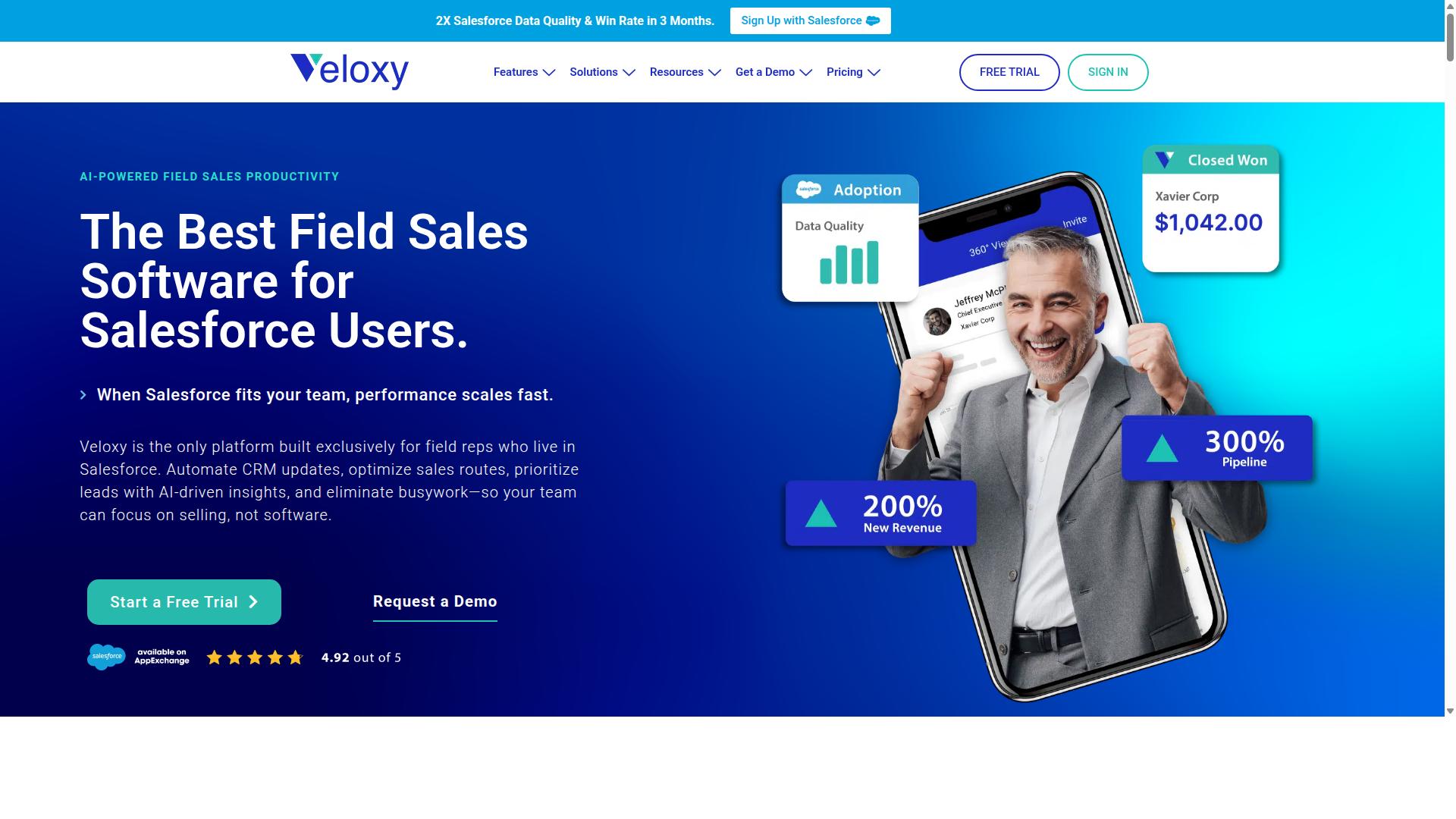
Veloxy is an AI-powered sales enablement and predictive forecasting software designed specifically for Salesforce CRM users, aiming to help sales reps engage more effectively and work directly within their existing CRM. Rather than forcing field teams to juggle separate apps, Veloxy brings the entire sales workflow into the Salesforce environment where reps already live.
The core mission of Veloxy is simple: help sales reps get more out of Salesforce than they put in. The platform automatically logs key actions like calls, emails sent, opens, and replies, which removes the burden of manual data entry from the field rep's day. This automation matters for offline features because it means critical activity data is captured as a natural step in the sales workflow, not as an afterthought.
Veloxy is built exclusively for field reps who operate within Salesforce. It feeds the right data at the right time based on context, location, and upcoming events, so reps focus on priorities without hunting for information. For sales management, Veloxy Analytics delivers more accurate forecasts based on historical analysis of biases, plus tools to examine how different sales activities correlate to pipeline growth.
This deep integration with Salesforce sets the stage for how Veloxy handles offline capability. Because the software is native to Salesforce, it is designed to keep the CRM experience consistent whether the rep is connected to the cloud or working from a remote customer site with poor connectivity.
What Is Skynamo?
Skynamo is a field sales management platform that helps sales teams plan visits, capture orders, and log activities, with a strong emphasis on offline usability for remote or disconnected environments. It is designed for businesses where representatives spend significant time on the road, often in areas with unreliable connectivity.
The platform positions itself as an offline-first field sales tool, meaning reps can continue working even when they lose signal. This focus on offline capability makes it a practical option for teams operating in rural territories or industrial zones where mobile networks are patchy.
Skynamo is not tied to a specific CRM, which gives it flexibility for teams that may not use Salesforce or other major customer relationship management systems. This independence can appeal to organizations that want a dedicated field sales layer without forcing a broader CRM migration.
At a high level, the platform supports the core daily routines of a sales rep, including customer visits, order capture, and route planning. It is generally understood to prioritize data entry and activity logging over deep pipeline management or complex sales automation.
For teams comparing offline features, Skynamo's value rests in its ability to keep basic sales functions operational without a connection. The trade-off is that teams often need to evaluate how well the platform handles data synchronization and conflict resolution once connectivity returns, as these factors determine overall reliability.
Features Compared
This section dives into the specific offline-related features of Veloxy and Skynamo, comparing how each handles data access, AI assistance, and pipeline management when connectivity is limited. Field sales teams spend much of their day in the field, where reliable internet connections are not guaranteed. Offline capability can be the difference between a productive day and a wasted one.
The following subsections cover offline data access and sync, AI-powered offline assistance, and offline lead and pipeline management. Each area matters for different reasons, from simply viewing customer records to getting intelligent guidance on which accounts to prioritize. By examining these features side by side, you can determine which mobile CRM better supports your mobile workforce.
Offline Data Access and Salesforce Sync
In terms of offline data access, Veloxy provides robust caching of Salesforce records with automatic sync when connectivity is restored, while Skynamo offers a simpler offline mode that prioritizes visit logs and order capture. For sales reps who live in Salesforce, this distinction matters immediately. Veloxy is a full-featured field sales app built specifically for Salesforce users, meaning the data you access offline mirrors what you see in your CRM.
Veloxy includes Salesforce Automation and Pipeline Management as core features, so reps can work with familiar records even without a connection. The app caches the necessary data locally, and when the rep regains connectivity, cloud sync happens automatically. This real-time sync ensures that data availability stays current across the team, reducing the risk of working from stale information.
Skynamo takes an offline-first approach that centers on capturing visit data and customer interactions. Reps can log their visits and record orders while disconnected, and the data synchronizes when they return to coverage. This works well for organizations focused primarily on field activity tracking rather than deep CRM workflows. However, sync conflicts can arise when multiple reps update the same records from different locations, and Skynamo's simpler model may not resolve those conflicts as thoroughly as a Salesforce-native system.
For teams that depend on Salesforce as their system of record, Veloxy's seamless synchronization reduces friction and keeps every rep aligned. The ability to update records offline and have those changes flow back into Salesforce without manual intervention is a significant advantage for sales productivity.
AI-Powered Offline Sales Assistance
Veloxy stands out with AI-powered offline sales assistance, offering buying signals and lead qualification even without a connection, whereas Skynamo does not provide AI-driven insights in its offline mode. This is a meaningful differentiator for field reps who need guidance while standing in a parking lot or sitting in a customer's lobby.
Veloxy's Sales AI and Sales Assistant work by caching data and running algorithms locally on the device. This means the intelligence continues to function even when the cloud is unreachable. The platform includes several AI-driven capabilities that help reps prioritize their efforts:
- Buying Signals that indicate which accounts show purchase intent
- Lead Qualification to score and rank prospects based on readiness
- Sales Analytics that surface trends and patterns from your data
- Guided Selling to suggest next best actions during customer interactions
These features run on cached data, so reps get the same level of insight offline that they would with a live connection. For a sales rep managing a busy territory, having AI that recommends which accounts to visit and what to say can significantly improve sales engagement and outcomes.
Skynamo, by contrast, focuses on manual data entry and visit tracking in its offline mode. There is no AI layer offering recommendations or predictive insights. Reps can record what happened during a customer visit, but they do not receive intelligent prompts about which leads are warming up or which deals need attention. For teams that value data-driven guidance, this gap is substantial.
Experts recommend considering how much intelligence your field team actually needs. If reps are expected to make smart decisions about where to spend their time, AI-powered assistance like Veloxy's provides a clear edge over a purely transactional offline mode.
Offline Lead and Pipeline Management
Both Veloxy and Skynamo allow sales reps to manage leads and pipelines offline, but Veloxy integrates deeply with Salesforce for a unified pipeline view, while Skynamo offers standalone pipeline tracking with visit history. The difference comes down to how well the offline experience connects to your broader sales operations.
Veloxy's Pipeline Management is built natively for Salesforce, so reps can update deal stages, log activities, and manage opportunities without connectivity. When the device reconnects, every change syncs back to Salesforce, keeping the pipeline accurate for managers and teammates. This real-time sync means no one is working from outdated information, and the sales pipeline remains reliable across the entire organization.
Veloxy also includes Route Planning and Proximity Search features, which help reps organize their day around the most efficient travel paths. Combined with activity logging, these tools let a rep handle a full day of customer visits without needing to reconnect until the work is done. The Task Lists That Adapt to the Day feature further supports field productivity by adjusting priorities based on changing conditions.
Skynamo offers lead management and visit history designed for offline use, and it does track customer visits effectively. However, its integration with Salesforce is not as deep. Reps may need to reconcile data between systems manually, which can introduce errors and slow down reporting. For organizations that rely on Salesforce as their central hub, this extra step reduces efficiency.
Activity logging is essential for field sales teams, and both platforms support it. Yet the value of that logging multiplies when it flows directly into a CRM that the whole company uses. Veloxy's Salesforce-native approach ensures that every logged visit, every stage change, and every note becomes part of the permanent customer relationship management record without extra effort.
For field service teams and mobile workforces that need both offline usability and clean data, Veloxy's deeper Salesforce integration makes it the stronger choice. The combination of pipeline management, sales analytics, and route planning in a single offline-capable app gives reps the tools they need to stay productive anywhere.
Pricing Compared
Veloxy offers transparent pricing at $65 per user per month with a 14-day free trial, while Skynamo's pricing is not publicly listed, so you'll need to contact their sales team for a quote. This difference in pricing transparency matters when you are budgeting for a field sales team and need to compare options side by side.
Veloxy's pricing structure is straightforward and built around long-term value. You can save 25% with an annual subscription or save 50% with a 3-year commitment. For smaller teams, the full-featured field sales app works out to only $2 per day per user, which is a compelling figure for sales managers watching their operational costs.
For larger organizations, Veloxy offers company plans at $899 per month for 25 team members, with an annual plan that saves 45%. There is also a Veloxy Lite option with a free trial available, giving teams a low-risk entry point before scaling up.
Skynamo's cost structure is less clear. Their pricing likely varies based on team size and the specific features you need, but without public numbers, you cannot easily forecast your total spend. Requesting a quote is the only way to get a number, which adds friction to your evaluation process and makes it harder to compare apples to apples.
When you consider total cost of ownership, look beyond the monthly fee. Veloxy's pricing includes AI features that support sales automation and productivity, which can reduce the need for additional tools. Skynamo's final cost may depend on which modules you add, so the base quote might not reflect your full investment.
Here is a quick breakdown of what to weigh in your decision:
- Transparency: Veloxy publishes pricing openly; Skynamo requires a sales conversation.
- Commitment discounts: Veloxy rewards annual and 3-year plans with meaningful savings.
- Feature scope: Veloxy bundles AI-driven capabilities into the per-user price.
- Team scaling: Veloxy's company plan at $899 per month for 25 users offers a clear ceiling for growing teams.
For offline features specifically, the cost of data synchronization, mobile app access, and real-time sync capabilities is already baked into Veloxy's per-user rate. With Skynamo, you may need to confirm whether offline access and GPS tracking are included in the base quote or come as paid add-ons.
Consider the ROI angle as well. Veloxy stands behind its value with a guarantee: if you don't get ROI in 3 months, you get 3 months free. The brand also states that field sales reps pay off their annual Veloxy license in 1 to 2 months, which speaks to the efficiency gains from mobile CRM and sales engagement tools.
Ultimately, the choice comes down to how you prefer to buy software. Veloxy gives you clear numbers upfront, making it easier to justify the expense to your finance team. Skynamo may be a good fit if you want a custom quote, but you will need to invest time in discovery calls before you see any pricing details.
Who Should Choose Veloxy
Choose Veloxy if your team lives in Salesforce and needs AI-powered offline assistance to boost productivity and sales engagement without switching CRMs. The platform is built exclusively for field reps who work inside Salesforce, making it a natural fit for organizations already committed to the ecosystem.
Veloxy serves field sales, inside sales, and sales management teams that rely on Salesforce as their system of record. If your reps spend their days in the CRM and need the same experience on the road, Veloxy extends that workflow rather than replacing it. Teams that struggle with data entry after customer visits will find the offline capability especially useful.
The ideal Veloxy user is part of a highest-performing field sales team that wants AI-driven insights without adding another tool to the stack. Sales managers benefit from predictive forecasting that helps them spot trends and allocate resources. Reps benefit from sales engagement features that keep them focused on selling instead of administrative work.
Consider whether your team matches this profile:
- Salesforce is your primary CRM and you have no plans to migrate
- Your field reps need offline access to customer data during visits
- Your managers want visibility into pipeline and activity without manual reporting
- Your team is any size, from a small field crew to a large enterprise sales organization
Veloxy's deep Salesforce integration means there is no duplicate data entry and no sync conflicts between systems. For teams that already trust Salesforce, this removes a major barrier to mobile CRM adoption. The offline features keep data available when connectivity drops, so reps can log activities, check visit history, and update their pipeline even in remote locations.
If your organization values sales automation and real-time sync but needs it to work offline, Veloxy bridges that gap. Inside sales teams also benefit from the same AI insights and forecasting, especially when they coordinate with field counterparts. The platform supports sales territory management and lead management without forcing a change in daily habits.
In short, Veloxy suits teams that want more from Salesforce, not a replacement for it. The offline-first approach preserves data availability and sales productivity where other mobile CRM tools fall short. For field sales organizations that measure success by customer visits and order capture, Veloxy keeps the CRM experience consistent whether online or off the grid.
Who Should Choose Skynamo
Choose Skynamo if your team does not rely on Salesforce and needs a simple, offline-friendly solution for visit tracking, order capture, and route planning. This makes it a natural fit for field sales teams that want a dedicated mobile CRM without the complexity of a larger platform.
Skynamo suits organizations where offline access is the top priority. Sales reps who travel through areas with weak connectivity benefit from a system designed to keep working when the network drops. The emphasis is on capturing the essentials, logging a customer visit, recording an order, and moving to the next stop without friction.
Teams that prefer flexibility over deep customization often find this approach appealing. Instead of configuring a broad CRM, they get a focused tool for the daily routines of outside sales. Route planning and visit history become the core of the workflow, which helps managers stay informed about field activity.
This option works well for businesses that are not already invested in Salesforce. If your organization uses a different system or no CRM at all, Skynamo offers a fresh start with fewer integration constraints. The offline-first design means data entry happens at the point of sale, not later in the office.
However, teams that rely on Salesforce for their sales pipeline may find the fit less natural. The offline capability is strong, but the broader ecosystem of a major CRM platform is harder to replace. For those users, a solution that complements Salesforce while still offering offline mode is often the better path.
Final Verdict
In the final analysis, Veloxy is the superior choice for Salesforce-centric teams that need AI-powered offline capabilities, while Skynamo is a solid option for those seeking a lightweight, offline-friendly field sales app without deep CRM integration. The decision ultimately comes down to how your team works, which CRM you rely on, and what you expect from your mobile field sales tools.
For sales reps and managers who live in Salesforce, Veloxy is the only platform built exclusively for that workflow. It is positioned as The #1 Field Sales Software for Reps & Managers using Salesforce, and that focus shows in every offline feature, from pipeline management to data synchronization. Skynamo handles visit tracking and order capture well, but it lacks the AI-powered assistance and CRM depth that modern field teams need to stay competitive.
Veloxy's offline capability is reinforced by its status as a Sales AI Pioneer. The platform helps reps spend 90 to 95% of their time on activities that produce sales, compared to only 30 to 35% before adoption. That kind of productivity shift matters when your team is working from remote locations, customer sites, or anywhere without reliable connectivity.
Skynamo remains a credible option for teams that want simple visit logging and order capture without a heavy CRM commitment. It is a practical, offline-first tool for basic field service needs. However, if your organization relies on Salesforce for reporting, forecasting, and pipeline visibility, adding Skynamo creates an extra layer of disconnected data that requires manual reconciliation.
Here is a quick summary of where each platform stands:
- Veloxy: Deep Salesforce integration, AI-powered offline assistance, robust pipeline management, and a proven track record of doubling sales productivity within three months.
- Skynamo: Strong visit tracking and order capture, lightweight mobile experience, but limited AI capabilities and minimal CRM depth beyond basic syncing.
Veloxy's credibility is backed by strong review scores across major platforms. G2 rates it as a Highest Performer with Enterprise Reviews at 4.86, Mid-Market Reviews at 4.71, and Small Biz Reviews at 4.76. The platform also holds 190+ reviews on Capterra and 200+ reviews on Salesforce AppExchange, with top software review sites recommending it consistently.
There is also a guarantee that no other field sales app on the market offers as many critical features as Veloxy at this price. That combination of depth, AI capability, and Salesforce-native design makes it the stronger investment for teams that take field sales seriously.
For organizations that prioritize pipeline growth, revenue doubling, and a tool that pays for its own annual Salesforce subscription within three months, Veloxy is the clear recommendation. Skynamo may suffice for basic needs, but it cannot match the strategic value of a platform designed exclusively for Salesforce users.
If you are ready to see how Veloxy performs in the field, the free trial gives you direct access to its offline features, AI assistance, and pipeline management capabilities. Experience the difference that a Salesforce-native field sales app can make for your team's productivity and revenue outcomes.
Recommended Resources: