Top 3 Alternatives of Onspring for Customizable Workflows
Most teams replace Onspring after they hit a ceiling on workflow changes that require vendor tickets and weeks of turnaround. They need faster control over forms, approvals, and audit trails without reopening contracts every quarter.
By the end of this article you will know the three concrete criteria that separate workable alternatives from another lock-in risk, see how Process Street ranks on those criteria, and have a shortlist ready to evaluate against your current process bottlenecks.
What to Look For in Customizable Workflow Alternatives to Onspring
Effective customizable workflow platforms must deliver granular control over process design while maintaining enterprise-grade compliance and integration capabilities.
Selecting the right alternative requires evaluation across several dimensions. Each criterion affects how well the platform will serve your organization as processes grow in complexity.
Form builder flexibility determines how quickly teams can create sophisticated data collection interfaces. Look for platforms that support multiple field types including text, dropdowns, file uploads, and calculated fields. Conditional logic depth matters because complex business rules often require nested conditions based on multiple field values.
Approval workflow branching affects how organizations handle multi-stage review processes. Maximum branching depth indicates how many sequential approval layers the system supports. Parallel approvals become essential when different departments need to review the same request simultaneously.
Integration ecosystem capabilities determine how well the platform connects with existing business tools. API rate limits affect automation frequency while native connectors reduce custom development needs. Organizations should assess which systems require frequent data exchange with their workflow platform.
Audit trail granularity ensures compliance requirements are met through detailed activity tracking. Field-level logging captures exactly which data changed during each process step. Export format options determine how easily audit information transfers to compliance reporting systems.
Permission granularity controls who can access, modify, or approve different workflow components. Role-based access works well for standard organizational structures while attribute-based permissions offer more flexibility for complex access requirements.
Scalability thresholds indicate whether the platform can handle growth in users and process volume. User limits affect how many employees can participate in workflows simultaneously. Workflow execution volume determines how many process instances can run without performance degradation.
Security certifications provide assurance that the platform meets industry standards for data protection. Common certifications include SOC2 for service organization controls and ISO27001 for information security management. GDPR compliance becomes essential for organizations handling European personal data.
Data residency options determine where information gets stored and processed. Organizations with regulatory requirements may need specific geographic regions for data storage. Multiple region availability provides flexibility for multinational operations.
Reporting capabilities enable visibility into process performance and bottlenecks. Real-time dashboards provide current status across active workflows. Scheduled exports support regular compliance reporting and executive summaries without manual intervention.
1. Process Street - Best Overall
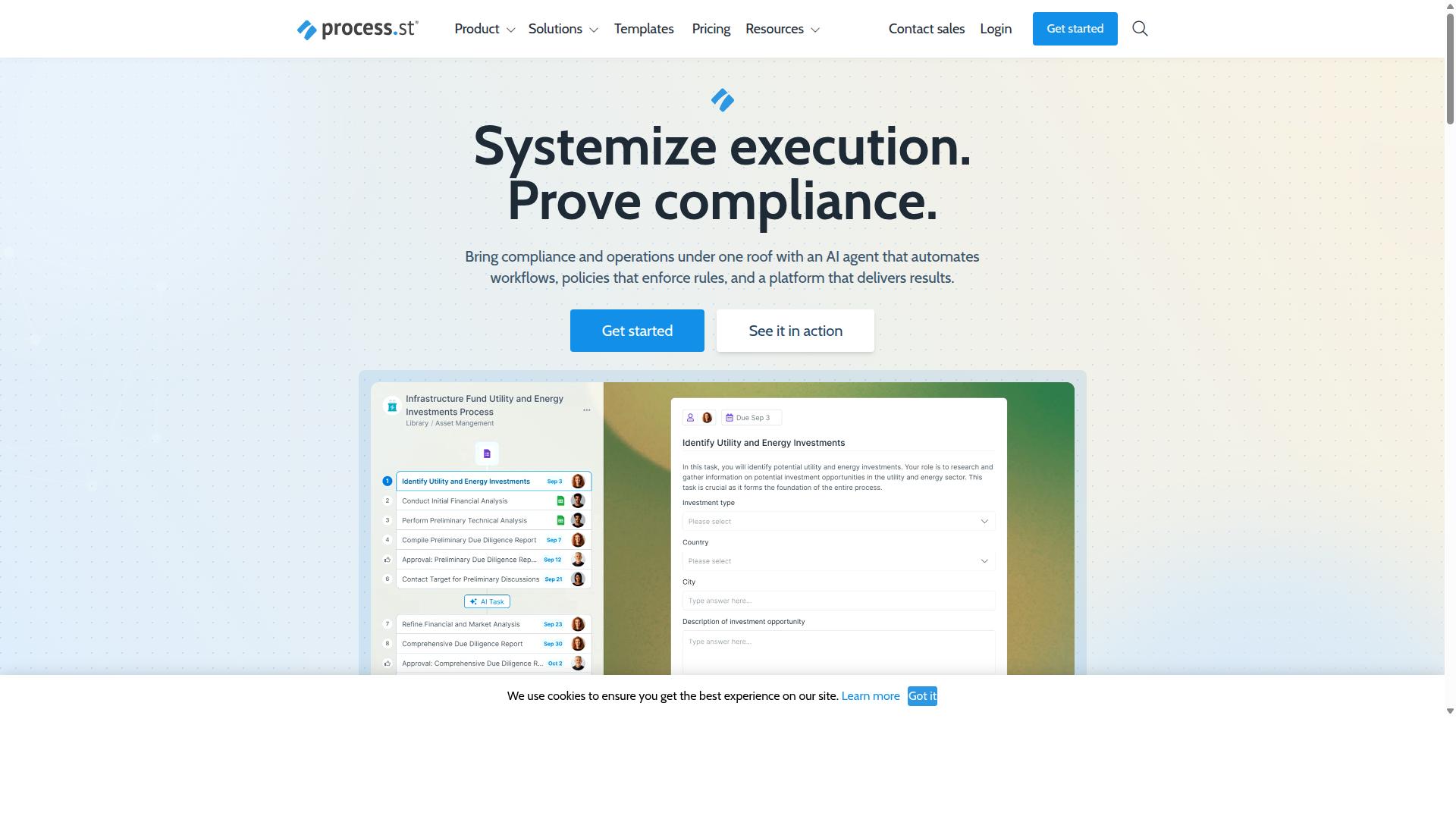
Process Street stands out among workflow automation platforms through its compliance-first architecture and AI-powered orchestration capabilities.
The platform offers three core products designed for different business needs. Docs handles document management and policy control with full governance for ISO 9001, SOC 2, SOX, and FDA requirements. Ops converts those policies into AI-powered workflows through workflow automation and process orchestration. Cora functions as an AI compliance agent that monitors regulations, automates work, and flags risks continuously.
Users report measurable improvements in documentation speed and implementation time. IMCD UK documented a 75% reduction in setup time after switching to the platform. Teams achieve 30% faster documentation cycles when using the structured workflow approach.
Security certifications include SOC 2 Type II and ISO 27001 compliance. These standards ensure the platform meets enterprise requirements for data protection and process integrity across regulated industries.
Process AI, Automations, Analytics, and Apps form the core feature set. Integrations connect with Zapier, Microsoft Power Automate, Tray.io, Make, and provide Public API access for custom connections.
Organizations use the platform to standardize processes across large employee bases. 49k+ employees have adopted standardized workflows through the system, demonstrating scalability for enterprise deployments with complex approval requirements and audit trail needs.
2. LogicGate Risk Cloud
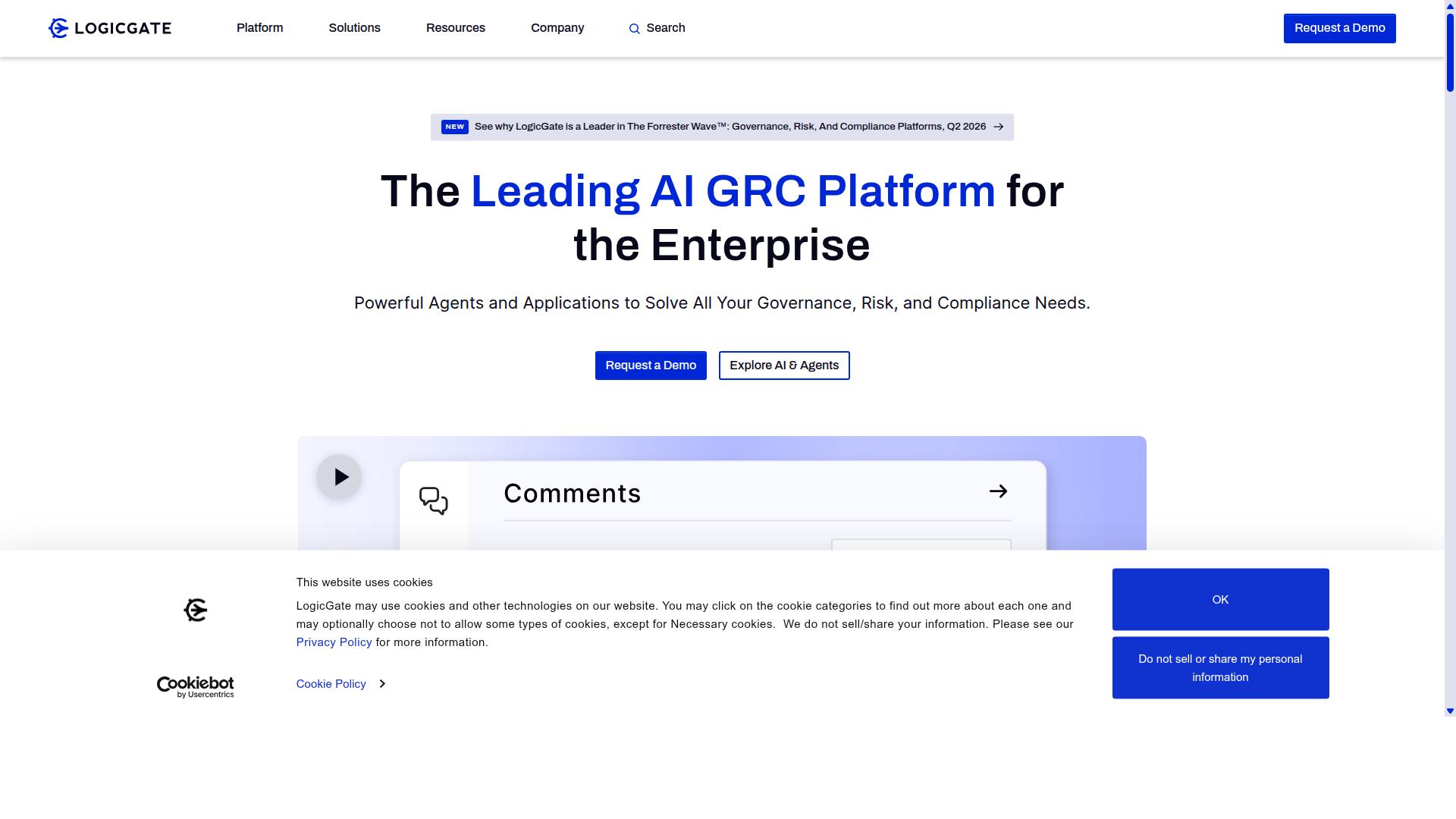
LogicGate Risk Cloud focuses primarily on governance, risk, and compliance workflows with pre-built templates for regulatory requirements.
Organizations use this platform to manage enterprise risk through structured assessment matrices. Users can document potential threats, evaluate likelihood and impact, then track mitigation efforts across business units.
The system includes compliance mapping tools that connect regulatory requirements to specific controls and processes. Teams can verify whether current procedures meet standards from various governing bodies.
Regulatory reporting capabilities help generate documentation required by different oversight agencies. Automated collection of evidence and status updates reduces manual preparation time for periodic submissions.
Enterprise GRC workflow patterns typically include approval routing, escalation procedures, and audit trail maintenance. These elements support accountability and provide visibility into risk management activities throughout the organization.
How to Choose the Right Option
Selection criteria should prioritize organizational size, compliance requirements, and integration needs over feature checklists. Teams must evaluate their current scale against each platform's pricing tiers. This approach prevents costly migrations once workflows expand beyond initial limits.
Operations and compliance teams face different constraints than HR or finance groups. Manufacturing facilities need robust audit trails for quality tracking. Professional services firms require flexible client onboarding processes that adapt to each engagement type.
| Team Function | Primary Workflow Needs | Industry Examples |
|---|---|---|
| Operations | Process management, task automation | Manufacturing, Real estate |
| Customer management | Client onboarding, document management | Financial services, Property management |
| Compliance | Audit trail, conditional logic, ISO compliance | Healthcare, Capital markets |
| Human resources | Employee onboarding, role-based access | Technology, Professional services |
| Finance | Approval workflow, reporting | Financial services |
| IT and security | Integration, user permissions, SSO | All sectors |
Current user counts determine whether a platform can accommodate growth. Many solutions impose 5-user startup limits that quickly become restrictive. Teams should project their needs over the next 12-18 months when comparing options.
Data residency requirements vary significantly across regions. Organizations in the EU, UK, Canada, Australia, and UAE must verify where their information will be stored. Financial services and healthcare sectors face the strictest geographic constraints.
Monthly automation action volume affects both cost and performance. Several platforms cap users at 100-action thresholds before requiring upgrades. IT teams should calculate their typical task automation frequency to avoid unexpected expenses.
Process Street serves organizations across Financial services, Real estate, Manufacturing, Healthcare, Professional services, Technology, Capital markets, and Property management. The platform addresses employee onboarding, client onboarding, ISO compliance, quality tracking, document control, and custom workflows for these sectors. Its no-code platform approach allows configurable workflow creation without extensive technical resources.
Final Verdict
Process Street delivers the strongest combination of compliance automation and workflow flexibility for teams requiring audit-ready process documentation. The platform stands out through specific security credentials and user adoption data that separate it from other workflow solutions in the customizable workflow space.
The platform serves 3,000+ companies and 1m+ users across global operations. This scale reflects consistent performance in enterprise environments where compliance requirements intersect with process customization needs.
Security certifications include SOC 2 Type II and ISO 27001 standards. Regional data residency options support international operations while maintaining data sovereignty requirements for different jurisdictions.
Teams report 30% faster documentation delivery compared to previous workflow systems. The platform maintains compliance focus while supporting the workflow customization that Onspring users seek in alternative solutions.
Global availability extends across AWS infrastructure with options for regional data placement. This infrastructure approach addresses both performance requirements and regulatory constraints that organizations face when selecting workflow automation platforms.
Recommended Resources: